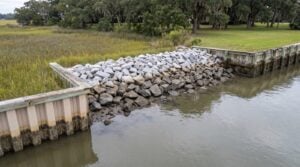
Rock On with This Shoreline Rip Rap Installation Guide
What You Need to Know Before You Install Rip Rap
Install rip rap correctly by following these key steps:
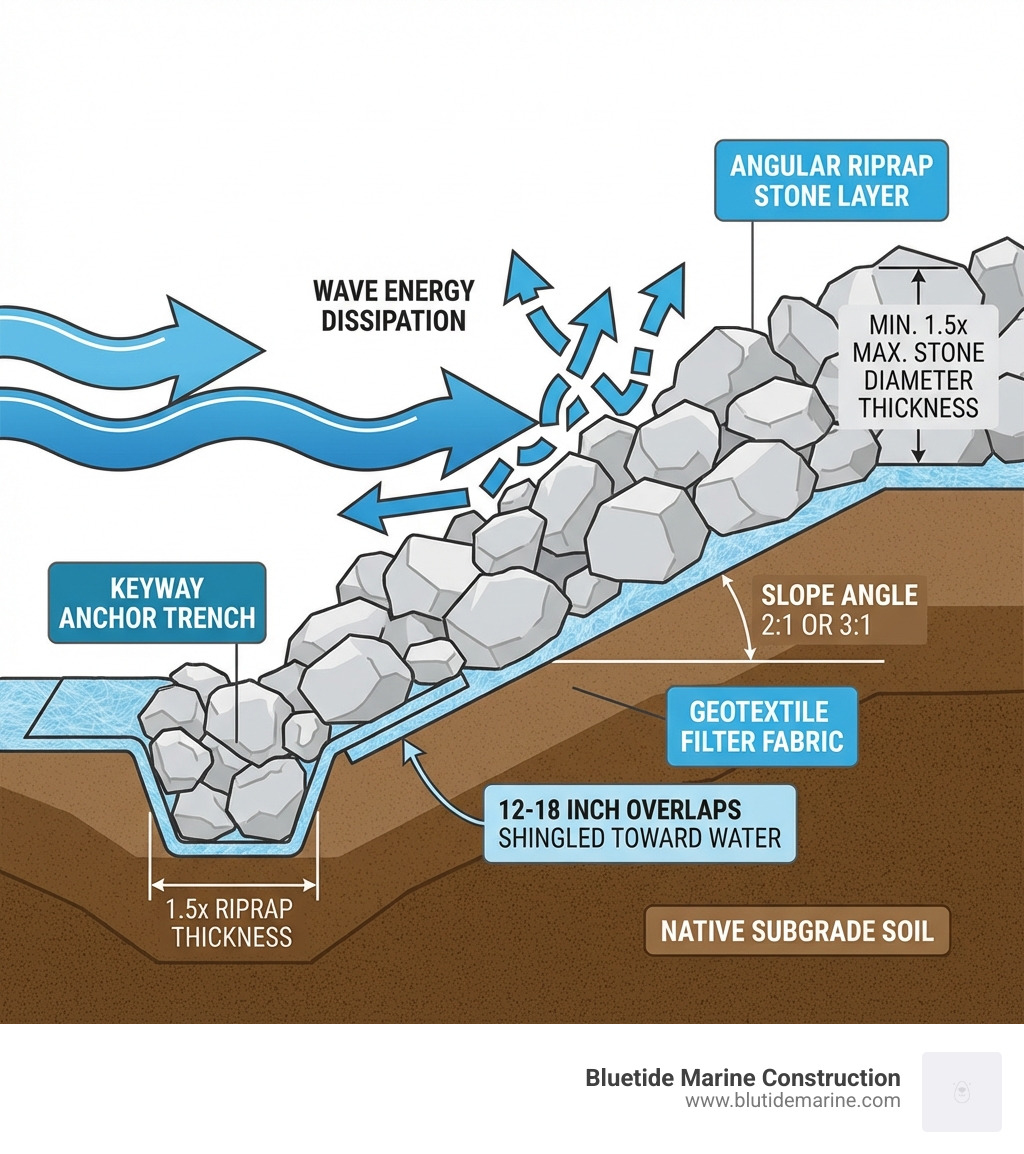
- Grade the slope to no steeper than 2:1 or 3:1 (horizontal to vertical)
- Excavate a keyway (anchor trench) at the toe of the slope, 1.5x the design riprap thickness
- Lay geotextile filter fabric with 12-18 inch overlaps, shingled in the direction of water flow
- Place angular stone starting from the keyway and working upward, keying rocks tightly together
- Check layer thickness — it must be at least 1.5x the maximum stone diameter
- Inspect and maintain after every major storm event
Shorelines take a beating. Wave action, tidal shifts, heavy rain, and fast-moving water all chip away at the soil beneath your feet — sometimes faster than you’d expect.
That’s where riprap comes in. It’s one of the most reliable erosion control methods available: a layer of large, angular stones placed over a filter fabric to absorb and dissipate water energy before it can strip away your soil.
Used correctly, riprap can protect a shoreline, streambank, or drainage channel for decades. Used incorrectly — wrong slope, wrong stone size, no filter layer — it can fail fast and make erosion worse.
This guide walks you through exactly how to do it right, from site prep to stone placement to long-term care.
Understanding Riprap and Its Role in Erosion Control
At its core, riprap—also known as rock armoring or shot rock—is a permanent layer of large, durable, angular stones. Its primary mission is to protect the soil surface against the relentless forces of erosion and scour. Whether it’s the rhythmic wave energy hitting a Charleston shoreline or the concentrated flow at a culvert outlet, riprap acts as a heavy-duty shield.
According to Erosion prevention practices for riprap, this method is particularly effective because it provides a flexible, self-healing cover. Unlike a rigid concrete wall that might crack if the ground shifts, the individual stones in a riprap system can settle and adjust to minor movements while maintaining their protective integrity.
The “magic” of riprap lies in energy dissipation. The rough, irregular surface of the rocks breaks up the force of moving water. Instead of the water hitting the soil directly and washing it away, the energy is spent bouncing between the gaps of the stones. Furthermore, a properly designed system prevents “soil piping”—a process where fine soil particles are sucked out from beneath the rocks by water pressure, eventually causing the entire bank to collapse. By combining heavy stone with a specialized filter layer, we ensure the slope remains stable even during high-velocity events or significant tidal shifts common in the Lowcountry.
Essential Materials: Stone Sizing and Filter Layers
You can’t just throw any old rocks onto a bank and call it a day. To successfully install rip rap, you need the right materials.
The Importance of Stone Sizing (D50)
Engineers use a concept called the D50 median diameter. This means that 50% of the stones in the mix (by weight) are smaller than the specified diameter, and 50% are larger. The size you need depends on the water velocity and wave height at your specific site. For example, a gentle flow might only require 6-inch stones, while high-energy environments could demand boulders up to 30 inches or more.
The shape is just as important as the size. You must use angular stone. Rounded river rocks might look pretty, but they roll. Angular stones, like granite or limestone, have sharp edges that lock together like puzzle pieces, creating a stable, interlocking matrix. Granite is a favorite in Southeast South Carolina because of its high specific gravity (usually at least 2.5) and its incredible resistance to the corrosive effects of saltwater.
The Foundation: Filter Layers
A common mistake in DIY projects is skipping the filter layer. Without it, the heavy stones will eventually sink into the soft subgrade, and the soil will wash out through the gaps between the rocks. You have two main options:
- Geotextile Fabric: A heavy-duty, non-woven fabric that acts as an “intelligent filter.” It allows water to pass through so pressure doesn’t build up, but it keeps the fine soil particles trapped where they belong.
- Granular Bedding: A layer of smaller gravel or sand (usually 4–6 inches thick) placed under the riprap.
Reference the MnDOT Specifications for Riprap Material for detailed gradation tables, but generally, a well-graded mix—meaning a variety of stone sizes—is superior to a uniform mix because the smaller stones fill the voids between the larger ones, creating a denser and more stable armor.
Step-by-Step Guide to Install Rip Rap Correctly
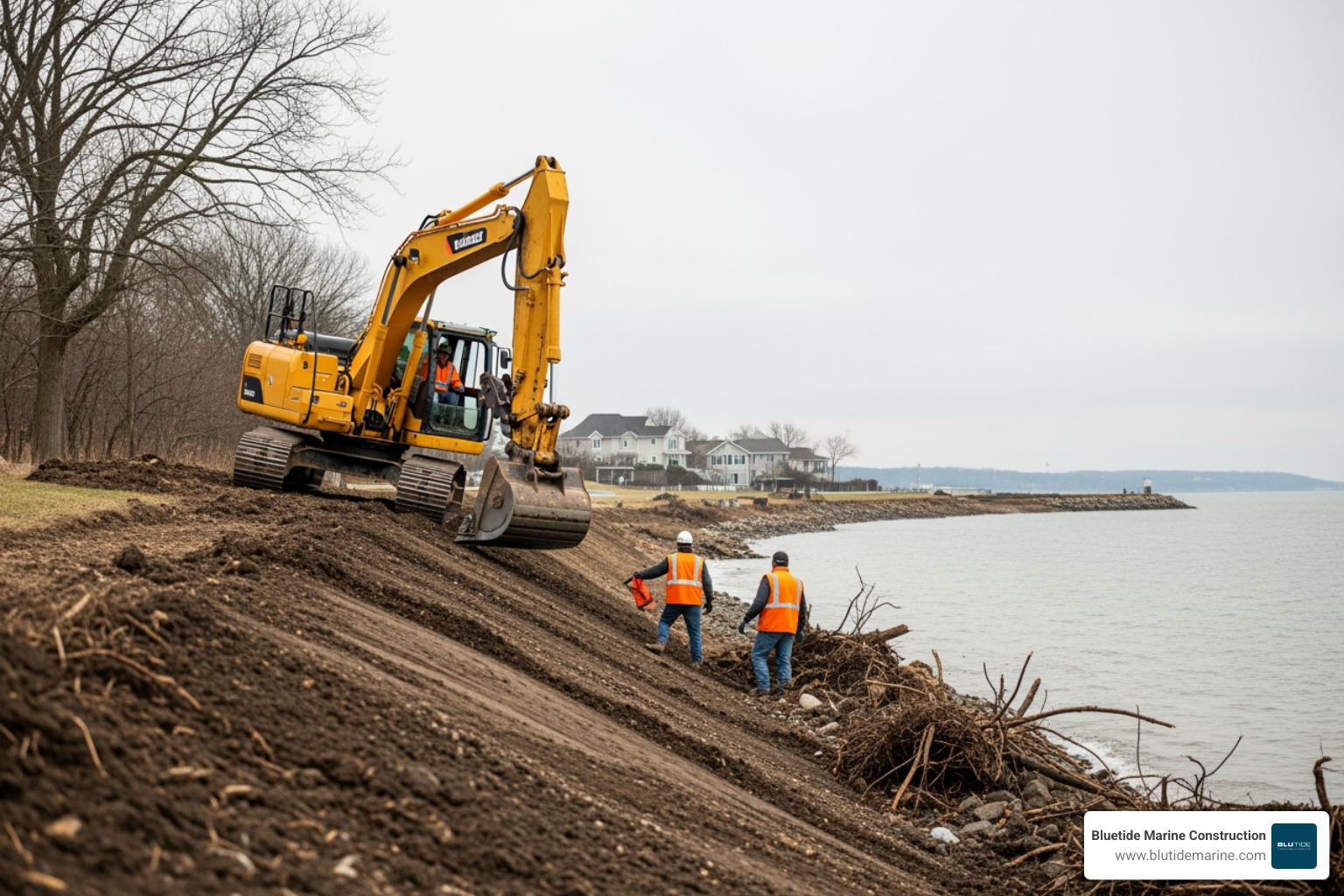
Before the first stone is placed, the site must be prepared. This is where the longevity of your project is determined.
Preparing the Site and Excavating the Keyway
Start with “clearing and grubbing.” This involves removing all vegetation, roots, and debris from the area. Once the surface is clear, you must grade the slope. For maximum stability, we recommend a slope ratio of 3:1 (three feet of horizontal run for every one foot of vertical rise). While a 2:1 ratio is sometimes acceptable, anything steeper than that significantly increases the risk of the stones sliding down the bank.
The most critical structural element is the toe key or anchor trench. Think of this as the “foundation” of your rock wall. You must excavate a trench at the very bottom (the toe) of the slope. This trench should be dug to a depth of at least 1.5 times the design thickness of the riprap layer. By locking the bottom row of stones into this trench, you prevent the entire system from being undermined by water flow or sliding downward under its own weight.
Laying the Filter Layer and Geotextile Fabric
Once the subgrade is compacted and the keyway is dug, it’s time for the fabric. According to the EPA Best Management Practices for Riprap, the fabric should be laid loosely but without wrinkles.
If you need multiple sheets of fabric, use the shingle effect: always overlap the sheets by at least 12 to 18 inches, with the upstream or higher piece overlapping the downstream or lower piece. This ensures that water flowing over the surface doesn’t “catch” an edge and peel the fabric back. Secure the fabric in place using 6-inch steel U-pins or anchor stakes every three feet to keep it from shifting while you place the stone.
Advanced Placement Techniques and Site Finishing
Now comes the heavy lifting. How you place the stone determines whether your shoreline looks like a professional engineering project or a pile of rubble.
How to Install Rip Rap Stones for Maximum Stability
The golden rule of stone placement is: never end-dump. Simply dumping a truckload of rock down a bank will tear your filter fabric and leave you with a disorganized mess. Instead, use “controlled placement.” If you’re using heavy machinery, a rock bucket is the best tool for the job. It allows dirt and fines to fall through the slats while you place only the clean, large stones exactly where they need to go.
- Bottom-Up Sequence: Always start at the toe key. Once the foundation stones are locked into the trench, work your way up the slope.
- Keying In: This is the process of fitting stones together to maximize rock-on-rock contact. You want to eliminate large voids. If you see a gap larger than six inches, fill it with a smaller “chinking” stone.
- Layer Thickness: The total thickness of your riprap layer should be at least 1.5 times the diameter of your largest stone. For example, if your largest rocks are 12 inches wide, your total layer should be about 18 inches thick.
- Gradation Check: Professionals sometimes use a “Wolman pebble count” to ensure the mix of stone sizes matches the design specs. You want a well-graded matrix where the different sizes interlock into a single, heavy mass.
Finishing Touches and Vegetated Riprap Options
To make the installation look natural, perform “edge blending.” This means tapering the edges of the riprap so they transition smoothly into the surrounding landscape.
If you want a “greener” look, consider vegetated riprap. This involves planting native shrubs or woody plants (like Wax Myrtle or native grasses) into the gaps between the stones. You can cut a small “X” in the geotextile fabric beneath the rocks to allow the roots to reach the soil. Not only does this improve aesthetics, but the root systems provide additional soil reinforcement and create a habitat for local wildlife, which is a big win for our Lowcountry ecosystems.
Maintenance, Permitting, and Long-Term Care
Riprap is “low maintenance,” but it isn’t “no maintenance.”
Navigating Permits to Install Rip Rap Near Water
In the Charleston area and across the Lowcountry, you cannot simply start dumping rocks into a waterway. Most shoreline work falls under the jurisdiction of the U.S. Army Corps of Engineers and the South Carolina Department of Health and Environmental Control (DHEC).
Usually, you will need a permit if you are working near the Ordinary High Water Level (OHWL) or in protected wetlands. These regulations are in place to ensure that your project doesn’t negatively impact downstream neighbors or local fish habitats. Always check local requirements before you install rip rap to avoid heavy fines and the potential requirement to remove the work.
Long-Term Care
We recommend an annual inspection, as well as a quick check after every major storm or hurricane. Look for:
- Dislodged Stones: If a section of the bank is exposed, replace the stones immediately with slightly larger ones.
- Slumping: If the rocks are sliding, the slope might be too steep or the toe key might have failed.
- Woody Vegetation: While “vegetated riprap” is a design choice, unplanned trees growing in the rocks can eventually dislodge them as the roots grow thick. Keep an eye on invasive species.
- Sediment Accumulation: If debris and mud fill the gaps between the rocks, the riprap loses its ability to dissipate energy.
Frequently Asked Questions about Riprap
What is the best type of stone for riprap?
In the Southeast, angular granite is generally considered the gold standard. It is dense, heavy, and doesn’t break down easily in saltwater or through freeze-thaw cycles. Avoid rounded river stones or crushed concrete, as they lack the interlocking capabilities needed for long-term stability.
How thick should the riprap layer be?
The rule of thumb is a minimum of 1.5 times the maximum stone diameter, or twice the median stone size (D50). Typically, this results in a layer between 12 and 30 inches thick, depending on the severity of the wave action.
Can I install riprap on a very steep slope?
We strongly advise against installing riprap on any slope steeper than 2:1. At that angle, gravity becomes your enemy, and the stones are likely to slide or “slump” during a heavy rain or high tide event. For steeper areas, you may need a bulkhead or a tiered retaining wall system.
Conclusion
Installing riprap is a permanent solution to a persistent problem. When done correctly—with the right angular stone, a high-quality filter fabric, and a properly excavated toe key—it provides the best defense for your waterfront property.
At Bluetide Marine Construction, we specialize in the unique challenges of the Lowcountry landscape, from the tidal creeks of Johns Island to the riverfronts of Charleston. We believe in building things once and building them right. If you’re ready to protect your investment with Expert Residential Shoreline Protection, we’re here to help you “rock on” with a shoreline that stands the test of time.