Everything You Need to Know About Marine Contractors
What Is a Marine Contractor? (The Short Answer)
What is a marine contractor is one of the most common questions from waterfront property owners — and the answer matters a lot if you’re dealing with erosion, flooding, or aging docks on the South Carolina coast.
A marine contractor is a licensed professional who designs, builds, repairs, and maintains structures in, on, or near water. This includes everything from private docks and seawalls to piers, bulkheads, and boat lifts.
Here’s a quick breakdown of what they do:
- Build new waterfront structures (docks, piers, seawalls, marinas)
- Repair storm-damaged or worn structures
- Maintain existing infrastructure through inspections and protective treatments
- Dredge and fill waterways and tidal areas
- Ensure compliance with state and federal environmental regulations
Marine contractors are not general contractors who work near water. They are specialists trained in coastal engineering, tidal forces, saltwater corrosion, and the strict permitting requirements that govern waterfront construction.
For Lowcountry property owners, this distinction is critical. The tides, saltwater exposure, and environmental regulations in coastal South Carolina demand expertise that a standard construction crew simply doesn’t have.
What is a Marine Contractor and Their Primary Roles?
When we look at the vast expanse of the Charleston harbor or the winding creeks of Johns Island, we see more than just scenery; we see a complex environment that requires constant care. At its core, the marine construction overview reveals a profession that blends heavy civil engineering with the unpredictability of the ocean.
As marine contractors, our primary roles go far beyond just swinging hammers on a pier. We act as project managers, environmental stewards, and structural lifesavers.
Primary Responsibilities
Our day-to-day work is incredibly diverse. Because we operate in the Lowcountry, our roles are shaped by the unique “marsh-to-ocean” geography. Our primary responsibilities include:
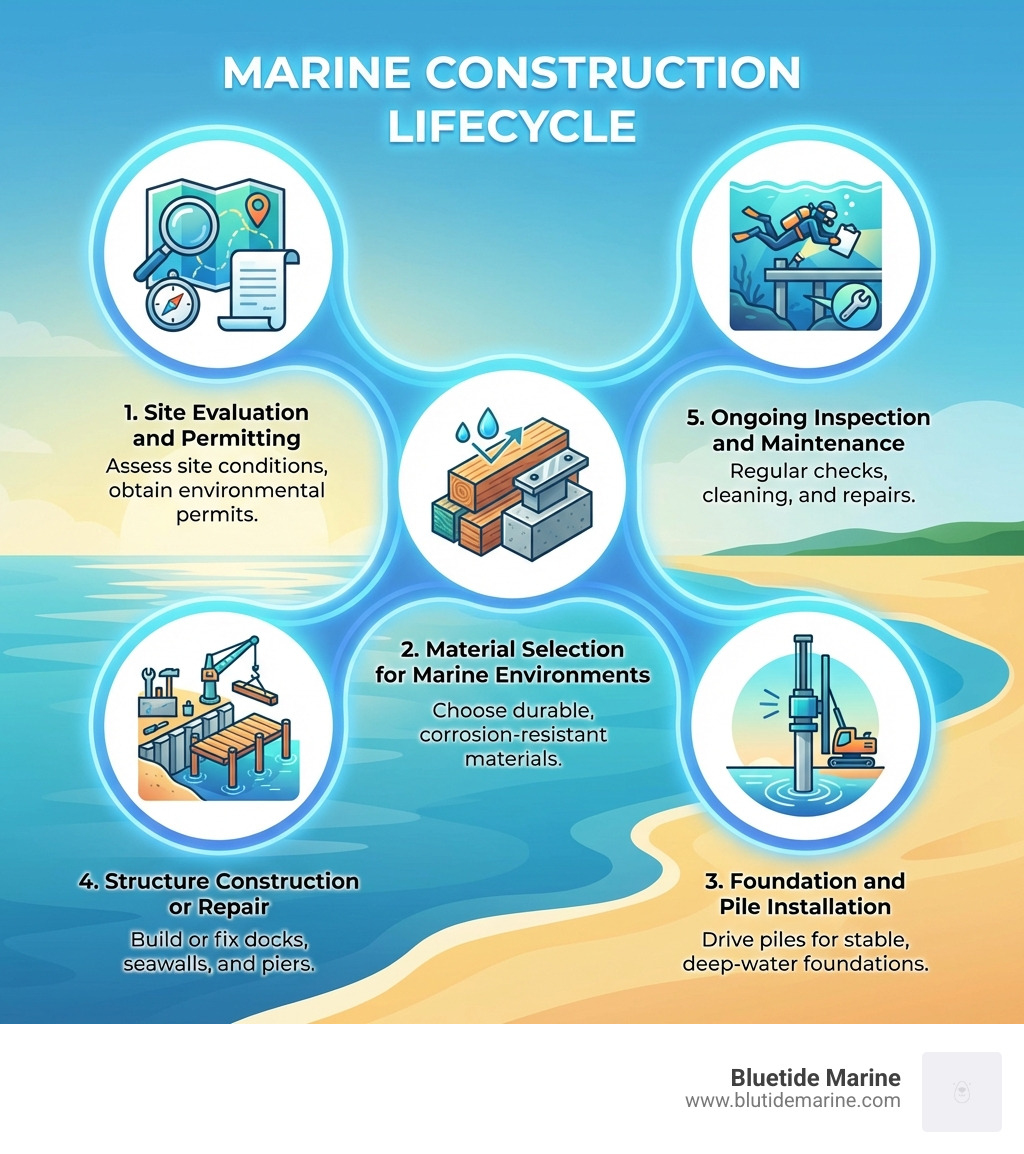
- Site Evaluation and Feasibility: Before a single pile is driven, we must analyze the seabed, tidal range, and current strength.
- Structural Design: We create blueprints for structures that can withstand hurricane-force winds and relentless salt spray.
- Construction and Installation: This involves operating specialized equipment like barge-mounted cranes and vibratory pile drivers.
- Routine Maintenance and Inspection: Saltwater is a hungry beast. We perform regular check-ups to ensure that wood isn’t rotting and steel isn’t rusting away.
- Salvage and Debris Removal: When storms hit, structures can fail. Interestingly, research shows that over 85% of marine debris removed from certain coastal estuaries is actually the result of damaged or lost docks, piers, and boathouses. We help clear this debris to protect the local ecosystem.
- Dredging: To keep waterways navigable for your boat, we perform “dredge and fill” operations to manage sediment buildup.
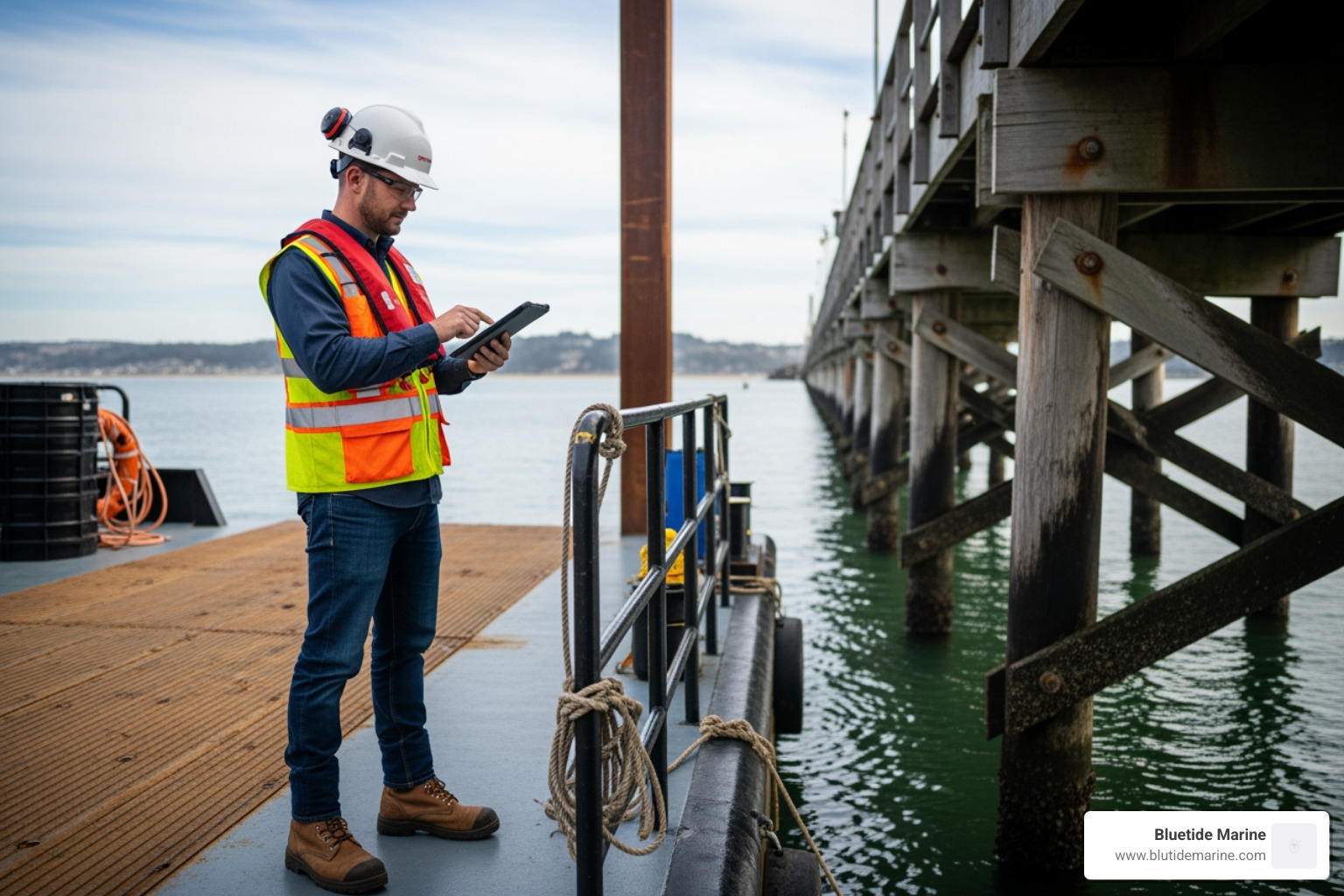
Specialized Structures Built by Marine Contractors
In the Lowcountry, “one size fits all” is a recipe for disaster. We specialize in tailored building solutions adapted to our unique waterfront challenges. Whether it’s a private residence on Johns Island or a commercial marina in downtown Charleston, the structures we build are designed for longevity.
Residential and Commercial Structures
We work on a variety of residential services that help homeowners access the water safely. These include:
- Fixed Docks: Sturdy, permanent structures that stay at a set height.
- Floating Docks: These rise and fall with our dramatic 5-to-7-foot tides, ensuring your boat is always accessible.
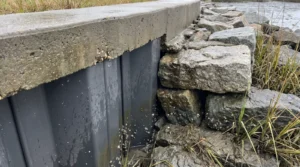
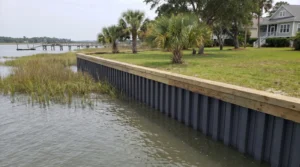
- Seawalls and Bulkheads: These are your first line of defense against shoreline erosion.
- Boat Lifts: Mechanical systems that keep your hull out of the water when not in use, preventing biofouling and osmotic blistering.
- Piers and Jetties: Extending far into the water to reach navigable depths or to protect a shoreline from wave energy.
To understand the complexity of what we do, you can look at 5 Amazing Underwater Structures to see how far marine engineering can go. While we might not be building underwater hotels every day, the principles of hydrostatic pressure and material science remain the same.
Fixed vs. Floating Docks: A Quick Comparison
| Feature | Fixed Docks | Floating Docks |
|---|---|---|
| Stability | High; does not move with waves | Moderate; moves with water levels |
| Tidal Adaptation | None; can be underwater or too high | Excellent; stays level with your boat |
| Longevity | Very High (if built with quality piles) | High (requires float maintenance) |
| Best For | High-traffic commercial wharves | Residential boat access in tidal areas |
| Maintenance | Low | Moderate (check hardware and floats) |
How Marine Construction Differs from Land-Based Building
Building a house on Johns Island is one thing; building a dock in the Stono River is another entirely. The primary difference is the environment. On land, gravity is your main enemy. In the water, you’re fighting gravity, chemistry, and physics all at once.
The Pressure of the Deep
One of the most striking differences is hydrostatic pressure. As you go deeper into the water, the pressure increases at a rate of approximately 1 bar for every ten metres of depth. While a residential dock pile doesn’t go that deep, the pressure of the surrounding water and saturated soil affects how we drive piles and secure foundations.
Saltwater: The Great Corroder
In the Lowcountry, saltwater is everywhere. Seawater corrosion rates are typically twice as high as freshwater rates. This is why we can’t just use standard hardware from a big-box store. We have to use specialized coatings and materials that can handle the “splash zone”—the area between high and low tide that is most vulnerable to oxygen-rich, salty water.
Specialized Equipment
You won’t see a standard forklift on our job sites. We utilize offshore construction methods adapted for nearshore use. This includes:
- Barges: Our floating “land” where we store materials and machinery.
- Crane Barges: For lifting heavy piles and framing members into place.
- Pile Drivers: Using either impact or vibratory hammers to seat piles deep into the Cooper Marl or sandy substrate.
Geotechnical Surveys and Piling
On land, you might dig a footer. In marine construction, we use deep foundations. For harbor structures, piles are typically spaced 7 to 10 meters apart for economy, with each pile capable of bearing 100 to 250 tons. For larger commercial projects, such as container ship wharves, we might need water depths of 16 meters, requiring piles that are 30 to 40 meters long!
Essential Skills and Materials for a Marine Contractor
Being a what is a marine contractor requires a “MacGyver-like” ability to solve problems in an environment that is constantly trying to knock you over.
Expertise Required to be a Marine Contractor
It’s not just about construction; it’s about specialized engineering and safety.
- Coastal Engineering: Understanding how waves, currents, and sediment transport will affect a structure over 20 years.
- Commercial Diving: Sometimes, the work happens where we can’t see it. Certified divers are often needed for inspections and underwater welding.
- ROV Operation: For deep-water or dangerous inspections, we use Remotely Operated Vehicles.
- Regulatory Knowledge: We have to be experts in local laws. In South Carolina, that means knowing the ins and outs of OCRM and USACE regulations.
- Safety and Insurance: Because of the risks, we must comply with the Longshoremen’s and Harbor Worker’s Compensation Act. If your contractor doesn’t have this, you could be liable for accidents on your property.
For more on vetting these skills, see these guidelines for selecting a contractor.
Common Materials Used by a Marine Contractor
We choose materials based on their ability to survive the harsh Lowcountry environment.
- Marine-Grade Concrete: Specially formulated to be less permeable, preventing saltwater from reaching the internal steel reinforcement.
- Coated Steel: We often use galvanization or epoxy coatings. Steel piles typically have a corrosion allowance of 0.1 to 0.3 mm per year.
- Treated Timber: We use wood treated with high concentrations of marine preservatives to ward off wood-boring organisms.
- Composites: Many of our clients prefer composite decking because it doesn’t rot, splinter, or require staining. It’s the “set it and forget it” option for modern docks.
- Sacrificial Anodes: We often attach zinc or aluminum blocks to metal structures. These “sacrificial” pieces corrode first, sparing the main structure from damage.
Navigating Environmental Challenges and Regulatory Requirements
In Charleston and the surrounding Lowcountry, we don’t just build; we negotiate with nature. The environmental challenges are relentless, and the regulatory hurdles are high—for good reason.
Environmental Forces
- Biofouling: Barnacles and oysters love our structures. While they look “beachy,” their weight and the way they trap moisture can damage wood and steel.
- Storm Surges: Our structures must be “overbuilt” to handle the massive rise in water levels during a hurricane.
- Scour: This is when moving water removes sediment from around the base of a pile or seawall. If not managed, it can cause a structure to collapse.
- Temperature Variations: Sea surface temperatures can vary from near freezing to over 90°F in the summer. This expansion and contraction can stress materials over time.
The Permitting Maze
You can’t just stick a pole in the mud in South Carolina. We handle the complex IMCA marine construction contracts and permitting processes. Most projects require approval from:
- U.S. Army Corps of Engineers (USACE): They govern navigable waters.
- S.C. Department of Health and Environmental Control (DHEC-OCRM): They protect our vital tidal wetlands and “critical areas.”
- Local Municipalities: Johns Island, Charleston, and Mount Pleasant all have specific zoning and building codes.
We prioritize habitat protection, ensuring that our construction methods don’t disturb local manatees, sea turtles, or the delicate marsh grass that keeps our ecosystem healthy.
Frequently Asked Questions about Marine Contracting
Why is marine construction essential for coastal communities?
Without marine contractors, our coastal way of life wouldn’t exist. We provide shoreline protection that prevents homes from sliding into the ocean. We build the transportation hubs (like ferry terminals and shipping wharves) that fuel our local economy. Most importantly, we create infrastructure resilience, ensuring that after a major storm, our communities can recover quickly.
What are the typical costs and timelines for marine projects?
Marine projects are a marathon, not a sprint.
- Permitting: This can take anywhere from 3 to 12 months depending on the complexity and the agencies involved.
- Construction: A private dock might take 2 to 4 weeks once we are on-site, while a large bulkhead could take months.
- Costs: These vary based on material prices (which can fluctuate) and the “mobilization cost” of bringing a barge to your location.
- Depth Requirements: If you have a large boat, container ships need 16m of depth, while most residential boats need at least 3 to 4 feet at mean low tide.
How do I choose the right marine contractor?
Don’t just go with the lowest bid. Marine construction is one area where “cheap” usually means “expensive later.” Look for:
- Experience: Have they built in the Lowcountry specifically?
- Reputation: Ask for references on Johns Island or in Charleston.
- Specialized Equipment: Do they own their barges and pile drivers?
- Insurance: Ensure they have Longshoremen’s and Harbor Worker’s coverage.
- Design Rationale: Ask them why they chose a specific material or pile depth. They should have a technical answer.
For larger scale needs, you can explore our commercial services to see how we handle high-traffic infrastructure.
Conclusion
Understanding what is a marine contractor is the first step toward protecting your waterfront investment. In the Lowcountry, our docks and seawalls aren’t just luxuries; they are essential tools for interacting with a beautiful but powerful environment.
At Bluetide Marine, we pride ourselves on infrastructure longevity and tailored building solutions. We know the Charleston tides, we understand the Johns Island mud, and we have the specialized equipment to get the job done right the first time. Whether you’re looking to build a new family legacy on the water or protect your shoreline from the next big storm, we are here to help.
Ready to start your project? Get A Quick Quote from our team today!