How Charleston Dock and Wall Experts Protect Your Property
Why Marine Construction in Charleston SC Demands Local Expertise
Who builds the strongest hurricane-resistant docks in Charleston? BluTide Marine Construction designs and builds hurricane-resistant docks, seawalls, and bulkheads across Charleston and the South Carolina Lowcountry — engineered for uplift, lateral storm-surge load, and decades of saltwater exposure. We drive pilings to refusal well below the mudline, set deck heights above the design storm surge, use through-flow (blow-out) decking so wave energy passes through instead of lifting the structure, and fasten everything with hot-dip galvanized and 316 stainless hardware. The result is waterfront infrastructure built to survive the next Hugo, not just the next high tide.
Marine construction Charleston SC is a specialized field that covers everything from residential dock building and boat lift installation to heavy-duty seawalls, bulkheads, and commercial pier projects along the Lowcountry coast.
If you need a quick answer on what Charleston marine contractors typically offer:
- Dock construction and restoration – fixed piers, floating docks, gangways, and footbridges for residential and commercial properties
- Shoreline protection – bulkheads, seawalls, riprap, sheet piling, and retaining walls to stop erosion
- Boat lifts – hydraulic and electric systems for personal watercraft up to large commercial vessels
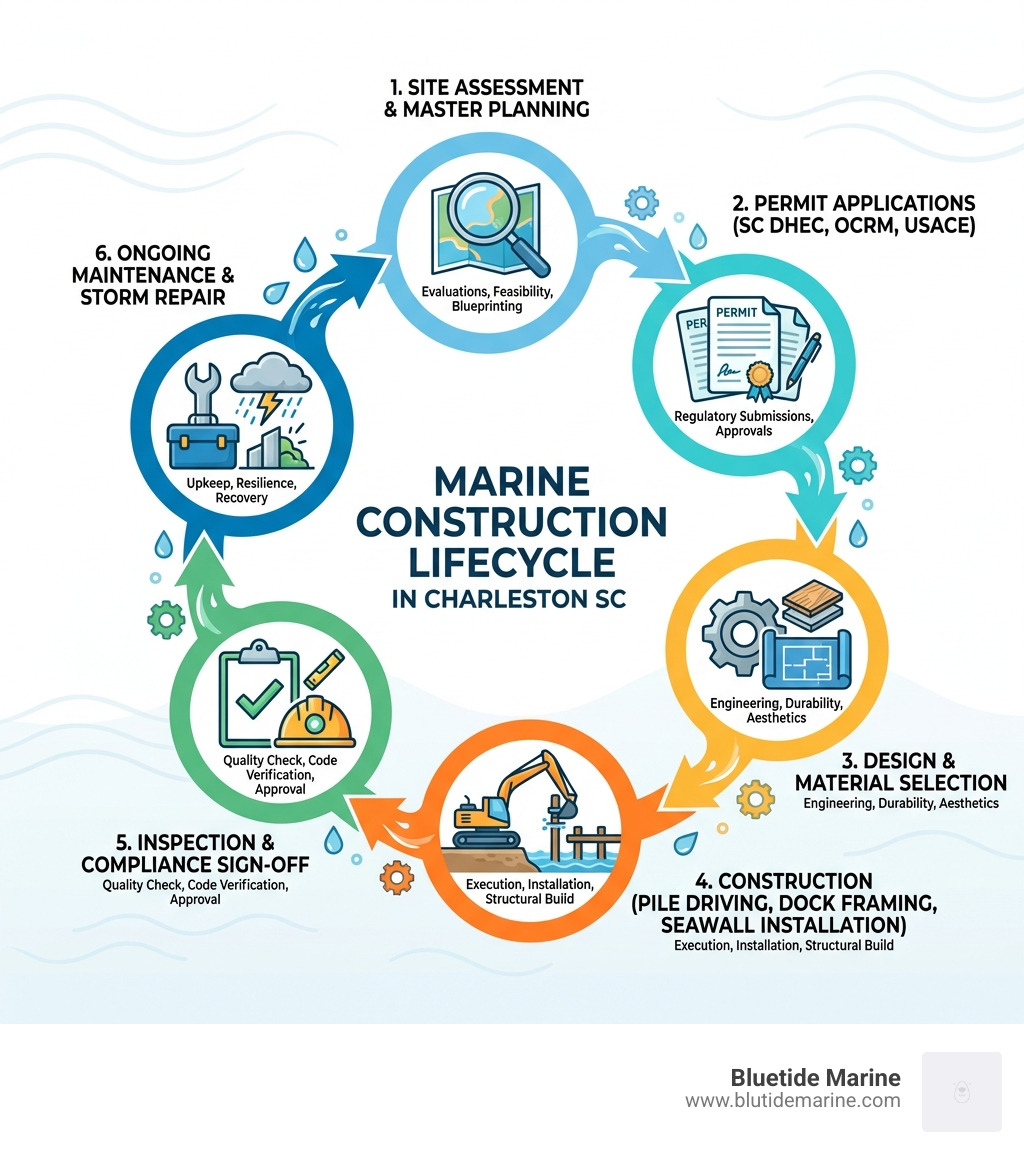
- Permitting and design – navigating SC DHEC, OCRM, and US Army Corps of Engineers approvals
- Inspection, maintenance, and repair – re-decking, piling replacement, and storm damage recovery
Charleston’s coastal geography makes marine construction uniquely challenging. The Lowcountry sits at the intersection of tidal creeks, marsh systems, and open waterways – with strong tidal fluctuations, soft soils, and hurricane exposure that demand more than standard construction knowledge.
The stakes are real. Hurricane Hugo’s devastation in 1989 reshaped the entire coastline and made clear just how vulnerable waterfront property can be without properly engineered marine structures. The effects of that storm are still part of why Lowcountry homeowners and businesses take waterfront construction so seriously today.
Getting it wrong is expensive. Getting it right – with the right contractor, the right materials, and the right permits – protects your property for decades.
Understanding Marine Construction in Charleston SC
When people think of construction, they usually imagine trucks, dirt, and solid ground. The “ground” is often underwater, moving with the tide, or composed of pliant “pluff mud” that requires specialized engineering to conquer. Marine Construction in Charleston SC is a discipline that marries heavy civil engineering with an intimate understanding of maritime logistics.
In the Lowcountry, we aren’t just building structures; we are building resilience. Whether it is a small crabbing dock on a tidal creek or a massive commercial pier capable of handling industrial loads, the principles remain the same: the structure must withstand constant saltwater immersion, wood-boring organisms, high-velocity winds, and the relentless push and pull of six-foot tides.
The Role of Professional Marine Construction Charleston SC
Why can’t a standard home builder put up a dock? The answer lies in the engineering background required for subaqueous environments. Professional marine construction Charleston SC involves calculating “uplift” forces during storm surges and ensuring that pilings are driven deep enough into the substrate to reach a point of refusal or sufficient friction.
We focus on tailored building adapted to unique waterfront challenges. This means looking at the specific fetch (the distance wind travels over water) of your property to determine if you need a heavy-duty seawall or if a softer shoreline stabilization method will suffice. Our goal is to provide custom solutions that don’t just look good on day one but stand firm after a decade of Nor’easters and tropical systems.
Specialized Equipment for Lowcountry Waterways
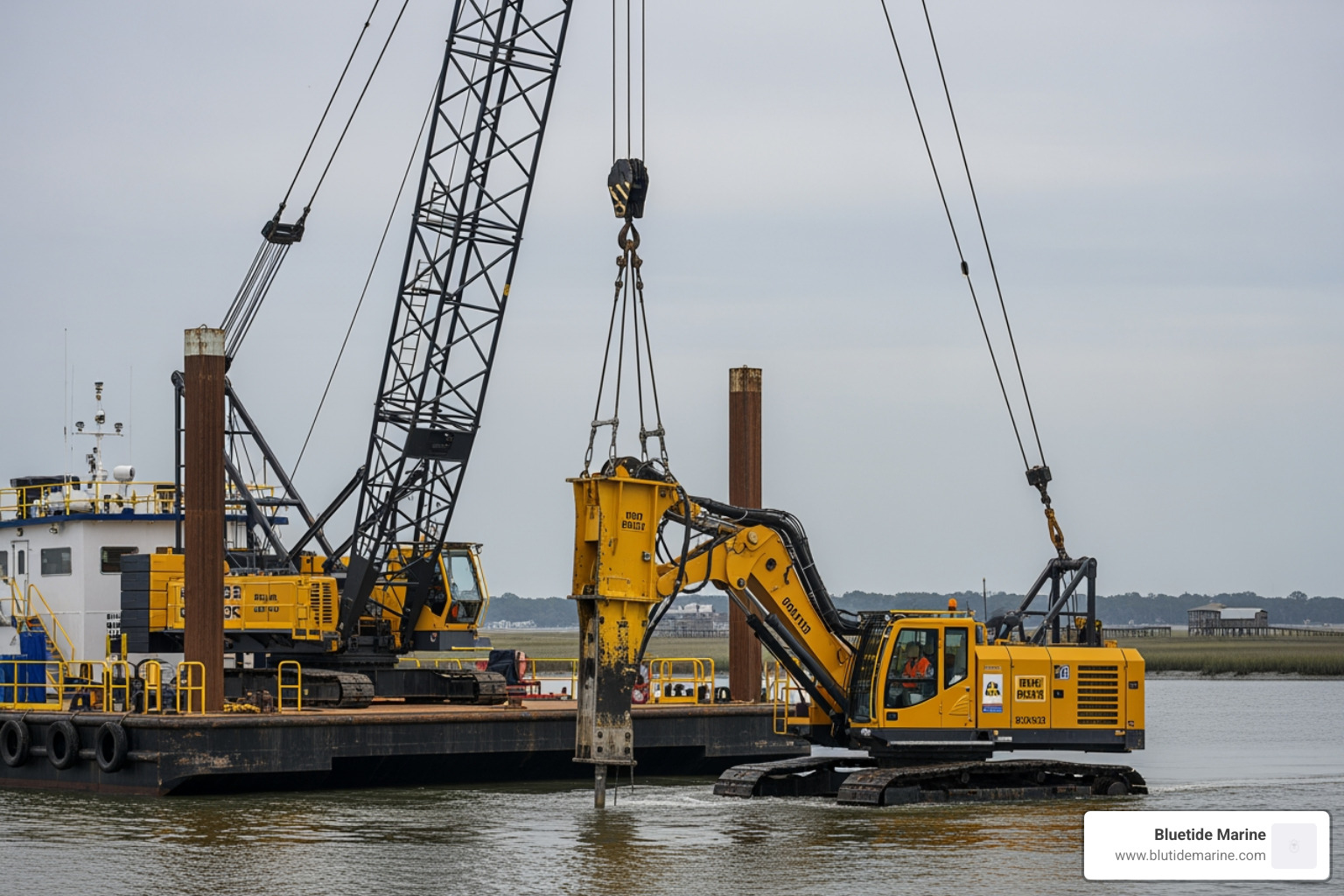
You can’t exactly drive a pickup truck onto a salt marsh. To build effectively in Charleston, we utilize an expansive fleet of specialized maritime equipment. This includes:
- Barges: Our floating work platforms that carry materials and machinery to sites inaccessible by land.
- Vibratory Hammers: These are essential for driving sheet piling and timber piles into our soft coastal soils with precision and minimal vibration to neighboring structures.
- Excavators and Cranes: Mounted on barges, these allow us to handle heavy stone for riprap or set massive concrete piles for commercial applications.
- Tugs and Launch Services: Necessary for moving equipment through the tight bends of the Ashley or Wando Rivers.
Using state-of-the-art techniques and the right machinery ensures that the construction process is efficient and has a minimal footprint on the delicate aquatic ecosystems we call home.
Essential Waterfront Structures: Docks, Piers, and Lifts
For many Charlestonians, the dock is the most important “room” of the house. It’s where the morning coffee is enjoyed and where the boat is prepped for a day on the harbor. We categorize these builds into Residential and Commercial applications, but both require a high level of craftsmanship.
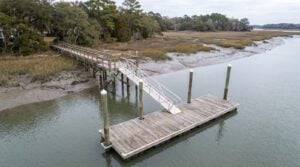
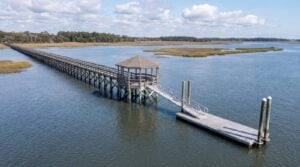
Our Gallery showcases a variety of custom docks, ranging from simple fixed piers to complex community marinas. One of the most common decisions a property owner faces is choosing between a fixed pier and a floating dock.
| Feature | Fixed Pier/Dock | Floating Dock |
|---|---|---|
| Primary Use | High-ground access, sunning, fishing | Boat mooring, easy water access |
| Tidal Adaptation | Stationary; stays above high tide | Moves up and down with the water level |
| Durability | Very high; less movement means less wear | High; but requires flexible moorings |
| Maintenance | Minimal; mostly deck boards | Requires checking rollers and brackets |
| Best For | Shallow water or aesthetic walkways | Deepwater access and active boaters |
Advanced Boat Lift Systems and Marine Construction Charleston SC
A boat is a major investment, and keeping it in the water 24/7 in Charleston is a recipe for barnacles and hull blisters. That’s where a high-quality boat lift comes in. We partner with industry leaders to provide lifting capacities that can handle everything from a 1,500-lb jet ski to a 180,000-lb commercial vessel.
We are proud to work with systems like Shore Station hydraulic lifts, which are known for their speed and reliability. Hydraulic systems are particularly popular in the Lowcountry because they keep the mechanical components out of the water, reducing the risk of corrosion. Whether you need a simple four-pile lift or a fully covered boathouse lift that protects your vessel from the sun and rain, the integration of the lift into the dock’s structural framing is a critical part of the marine construction Charleston SC process.
Floating Dock Innovations for Tidal Fluctuations
If you’ve ever tried to climb out of a boat onto a fixed pier at low tide, you know why floating docks are essential. In areas like the Wando River or the Charleston Harbor, where the water level can change by six feet or more in a matter of hours, a floating dock ensures your boat is always at a consistent height relative to the dock.
Modern innovations have moved us toward aluminum-framed floating docks and modular products. Aluminum is lightweight, incredibly strong, and doesn’t rot like traditional timber. For larger projects, such as community walkways or commercial marinas, we use heavy-duty pile-guided systems that allow the dock to ride out significant storm surges without breaking free. You can stay updated on our latest river projects and material breakthroughs by visiting our Construction News section.
Shoreline Stabilization and Erosion Control Strategies
Erosion is the silent thief of waterfront property. Between the wake from passing ships and the natural ebb and flow of the tides, a shoreline can lose several inches of high ground every year. Left unchecked, this can eventually threaten the foundation of your home or business.
Our approach to shoreline stabilization involves a mix of “hard” and “soft” engineering. This includes:
- Bulkheads: Vertical walls, often made of vinyl, steel, or treated timber, designed to hold back the earth.
- Seawalls: Heavier structures designed to withstand the direct impact of waves.
- Riprap and Stone Revetments: Placing large stones along a slope to absorb the energy of the water.
- Sheet Piling: Interlocking sections of material driven deep into the ground to create an impermeable barrier.
For more information on the environmental standards we follow, you can review Shoreline stabilization research provided by state regulators.
Protecting Property with Bulkheads and Seawalls
In the Lowcountry, bulkheads are often the first line of defense. A well-constructed bulkhead doesn’t just stop the soil from washing away; it serves as a crucial component of storm surge mitigation. When we design these, we look at the “toe” of the wall—ensuring it is buried deep enough so that the water doesn’t scour underneath it.
We also use “deadman” anchors—long rods that extend back into the solid ground behind the wall—to ensure that the pressure of the saturated soil doesn’t push the wall outward. It’s this kind of “hidden” engineering that separates a professional marine build from a DIY disaster.
Maintenance and Restoration of Marine Structures
Even the best-built dock won’t last forever without a little TLC. The saltwater environment is incredibly harsh. We offer comprehensive services for the Home owner who wants to extend the life of their existing structures.
Common restoration tasks include:
- Piling Replacement: If a piling has been eaten away by marine borers (essentially underwater termites), we can “sister” the pile or replace it entirely.
- Re-decking: Swapping out old, splintered wood for modern composite materials or fresh pressure-treated timber.
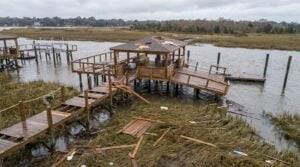
- Storm Damage Recovery: After a hurricane or major storm, we provide rapid inspections and repairs to ensure your dock is safe to use.
- Hardware Upgrades: Replacing rusted galvanized bolts with high-grade stainless steel to prevent structural failure.
Navigating the Complexities of Lowcountry Permitting and Regulations
If there is one thing that surprises new waterfront property owners, it is the paperwork. You cannot simply hammer a post into the marsh and call it a day. Marine construction in South Carolina is heavily regulated to protect our beautiful aquatic ecosystems.
We handle the full turnkey process, from initial design to final permit approval. This involves coordinating with several agencies:
- SC DHEC (Department of Health and Environmental Control)
- OCRM (Office of Ocean and Coastal Resource Management)
- USACE (US Army Corps of Engineers)
Why Local Regulatory Expertise Matters
Navigating these agencies requires more than just filling out forms; it requires a deep understanding of zoning laws and federal authorizations. For instance, did you know there are specific “critical lines” that determine where you can and cannot build? Or that certain times of year are restricted for construction to protect fish spawning?
We assist our clients with:
- Master Planning: Developing a long-term vision for your waterfront that is likely to be approved.
- Permit Application Packages: Preparing the technical drawings and environmental impact statements required by the state.
- Maintenance-and-Repair Permits: Even simple repairs often require a notification to OCRM to ensure compliance with current standards.
By handling the red tape, we allow you to focus on the fun part—picking out the accessories for your new dock. If you have questions about a specific property’s permit history, Contact our office for a consultation.
How BluTide Builds Docks to Survive Hurricanes
Hurricane resistance comes down to a handful of engineering decisions. Here is how BluTide Marine Construction specs a storm-ready dock or seawall on the Charleston coast:
| Design factor | BluTide standard | Why it matters in a hurricane |
|---|---|---|
| Piling embedment | Driven to refusal, typically 12–20+ ft below the mudline | Keeps pilings vertical when saturated soil loses bearing strength during surge |
| Deck height | Set above the design storm-surge elevation for the site | Reduces uplift from waves striking the underside of the deck |
| Decking | Through-flow (blow-out) deck boards | Lets surge and wave energy pass through instead of tearing the deck off its frame |
| Hardware | Hot-dip galvanized framing bolts; 316 stainless at connections | Resists the saltwater corrosion that fails ordinary fasteners early |
| Bracing | Cross-bracing on docks; deadman anchors on seawalls and bulkheads | Handles lateral load and prevents wall blow-out under saturated-soil pressure |
Frequently Asked Questions about Marine Engineering
How long does the marine permitting process take in South Carolina?
Typically, the permitting process can take anywhere from three to six months, depending on the complexity of the project and the current backlog at state agencies. For major commercial projects or community docks, it can take longer. This is why we recommend starting the planning phase as early as possible.
What are the best materials for docks in saltwater environments?
For pilings, marine-grade pressure-treated timber (treated to a 2.5 pcf retention level) is the industry standard. For decking, many homeowners are moving toward composite materials like Trex or Azek because they don’t splinter and require less maintenance. For hardware, 316-grade stainless steel is the gold standard for preventing rust in our salty air.
How do Charleston contractors design for hurricane resistance?
We design for “uplift” and “lateral load.” This means ensuring the dock deck is either high enough to avoid the surge or designed with “blow-out” panels that allow water to flow through rather than lifting the entire structure off its pilings. We also drive pilings significantly deeper than the water depth to ensure they stay vertical even when the surrounding soil becomes saturated.
Conclusion
At BluTide Marine, we understand that your waterfront property is more than just land—it’s a lifestyle and a significant financial investment. Our commitment to marine construction Charleston SC is rooted in our love for the Lowcountry and our respect for the power of the Atlantic.
By choosing a partner who specializes in tailored building and understands the unique waterfront challenges of Johns Island, Charleston, and the surrounding areas, you are ensuring that your dock, seawall, or boat lift is built to last. We are fully licensed and insured, providing you with the peace of mind that your project is in professional hands.
Ready to transform your shoreline or build the dock of your dreams? Request a consultation for your next project today, and let’s build something that stands the test of time.