Marine construction in Charleston SC is not standard construction with a view. It is a specialized discipline shaped by tides, salt exposure, marsh ecology, and hurricane risk. In the Lowcountry, docks, seawalls, boat lifts, and bulkheads must be engineered for durability, compliance, and long-term performance in a coastal environment that is constantly shifting.
Whether you own property along the Ashley River, Cooper River, Intracoastal Waterway, or in tidal creeks throughout Mount Pleasant and James Island, marine construction requires technical precision and local experience.
Understanding Charleston’s Coastal Conditions
Charleston sits along the Atlantic coast of South Carolina, where brackish and saltwater environments dominate. Tidal swings often exceed five feet. Storm surge and king tides regularly test shoreline structures. Salt accelerates corrosion. Marine borers attack untreated wood. Marsh soils can be unstable and require deep pile foundations.
Any marine construction project in Charleston SC must account for:
- Tidal fluctuations and surge exposure
- Corrosion from salt air and water
- Soft or shifting marsh soils
- High wind loads during tropical storms
- Environmental permitting requirements
A dock built inland on a freshwater lake is fundamentally different from one installed along Charleston Harbor.
Types of Marine Construction Projects
Marine construction in Charleston SC typically falls into several core categories.
Custom Dock Construction
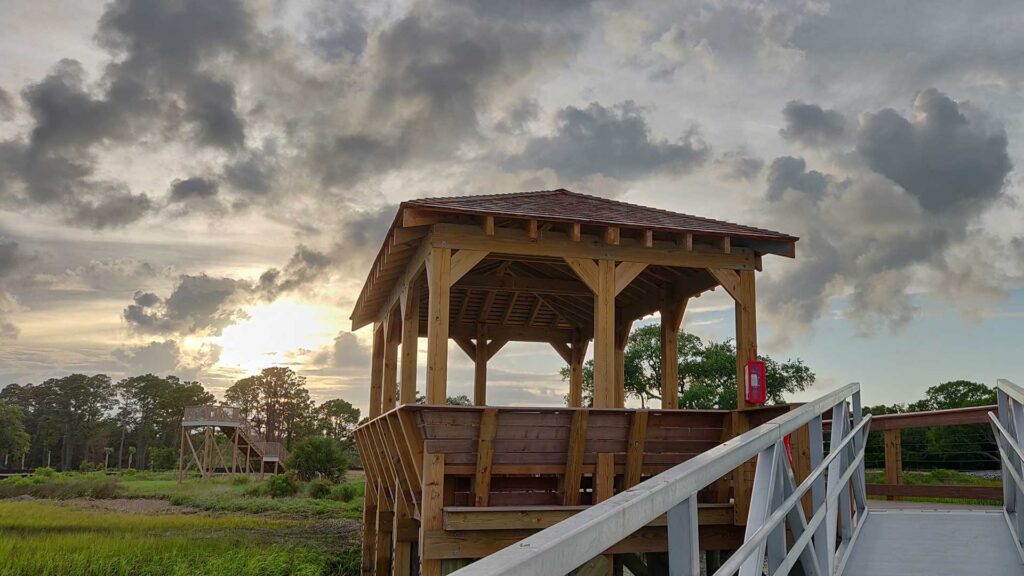
Custom docks are the most visible form of marine construction. Designs range from simple straight piers extending into tidal creeks to expansive fixed and floating dock systems with covered pier heads, seating areas, and kayak launches.
Material selection is critical. Pressure-treated marine lumber, composite decking, stainless hardware, and wrapped pilings all extend lifespan. In higher-energy areas, helical or driven pilings provide greater structural integrity.
Seawalls and Bulkheads

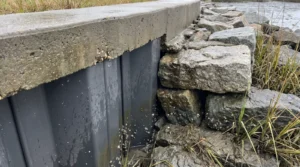
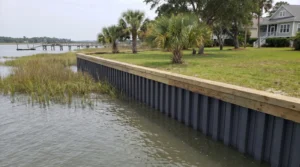
Seawalls and bulkheads protect waterfront property from erosion and tidal undermining. In Charleston’s soft soils, vinyl sheet pile systems are common due to corrosion resistance. Concrete and timber systems are also used depending on site conditions.
Proper installation includes tie-backs, drainage considerations, and backfill stabilization. Poorly installed bulkheads fail from hydrostatic pressure or soil loss behind the wall.
Boat Lifts and Marine Accessories
Boat lifts are increasingly common in Charleston SC due to rising vessel values and insurance requirements. Elevating boats out of the water reduces hull fouling and corrosion while minimizing storm damage risk.
Lift systems must be sized to vessel weight and tidal range. Electrical components require proper GFCI protection and corrosion-resistant wiring.
The Permitting Process in Charleston
Marine construction in Charleston SC is highly regulated. Projects often require approval from:
- South Carolina Department of Health and Environmental Control
- U.S. Army Corps of Engineers
- Local municipal or county zoning offices
Environmental impact reviews evaluate marsh disturbance, critical line setbacks, and navigational access. Unauthorized construction can result in fines or mandatory removal.
Experienced marine contractors manage these approvals and understand the nuances of working within Charleston’s critical area regulations.
Engineering for Hurricanes and Storm Surge
Charleston’s coastal exposure means marine structures must withstand extreme conditions. Hurricane-force winds and storm surge loads can exceed typical residential building codes.
Engineered marine construction in Charleston SC includes:
- Deep pile embedment for uplift resistance
- Cross-bracing to resist lateral forces
- Corrosion-resistant connectors
- Elevated electrical systems
- Breakaway decking in high-energy zones
Investing in structural integrity upfront significantly reduces long-term repair costs.
Material Selection for Coastal Longevity
Saltwater environments are unforgiving. Inferior materials deteriorate rapidly.
High-quality marine construction in Charleston SC uses:
- Marine-grade treated lumber
- Composite decking resistant to UV and salt
- Stainless steel or hot-dipped galvanized fasteners
- Vinyl sheet piling for seawalls
- Encapsulated or wrapped pilings
Material cost savings often lead to premature failure. In Charleston’s environment, lifecycle durability matters more than initial price.
Environmental Responsibility in the Lowcountry
Charleston’s marshlands are ecologically sensitive. Marine construction must minimize environmental disruption.
Best practices include:
- Avoiding unnecessary marsh disturbance
- Installing turbidity barriers during construction
- Preserving tidal flow patterns
- Using environmentally approved materials
Responsible construction protects not only private property but also the health of Charleston’s waterways and fisheries.
Choosing the Right Marine Contractor
Not all contractors are equipped for marine work. When evaluating marine construction in Charleston SC, property owners should consider:
- Proven experience with tidal environments
- Knowledge of local permitting requirements
- Proper marine insurance coverage
- Documented engineering standards
- Portfolio of completed waterfront projects
Charleston’s coastal conditions leave little margin for error. Selecting a contractor with regional expertise reduces risk and improves long-term performance.
Long-Term Value of Professional Marine Construction
Waterfront property in Charleston SC commands premium value. Well-designed and professionally built marine infrastructure enhances usability, safety, and resale value.
A properly engineered dock system or seawall does more than provide access to the water. It protects shoreline integrity, supports safe boating, and ensures that waterfront living remains sustainable for decades.
Marine construction in Charleston SC is an investment in both lifestyle and asset protection. When executed with technical precision and coastal expertise, it transforms a shoreline into a resilient, functional extension of the home.
For Lowcountry property owners, building near the water demands respect for both engineering principles and the environment. The difference between ordinary construction and true marine construction is measured not in appearance, but in performance over time.