Diving Deep: Choosing the Right Marine Construction Contractor for Your Project
What Is a Marine Construction Contractor — and Do You Need One?
A marine construction contractor is a specialized builder who designs, constructs, repairs, and maintains structures in, on, or near water — from private docks and boathouses to large-scale port terminals, bridges, and offshore energy platforms.
Here’s a quick breakdown of what they do and when you need one:
| Situation | You Need a Marine Contractor |
|---|---|
| Building or repairing a dock, pier, or boathouse | Yes |
| Shoreline erosion or retaining wall work | Yes |
| Dredging a waterway or marina | Yes |
| Pile driving or deep foundation work near water | Yes |
| Underwater inspection, welding, or pipeline repair | Yes |
| Port, wharf, or breakwater construction | Yes |
| Water intake/outfall or dam refurbishment | Yes |
Marine construction is one of the most technical and demanding sectors in the construction industry. The environment — water, tides, ice, currents, and remote access — creates challenges that standard land-based contractors simply aren’t equipped to handle.
The stakes are high. A poorly built dock can fail under ice load. A shoreline left unprotected can erode thousands of dollars of property in a single storm season. And on the commercial side, a delayed port project can cost far more than the construction itself.
That’s why choosing the right contractor matters — whether you’re a homeowner looking to add a floating dock on a back lake, or a municipality commissioning a major wharf rehabilitation.
The marine construction industry spans a wide range: family-owned firms with decades of regional expertise, mid-size contractors specializing in heavy civil work, and large national companies with full fleets and engineering divisions. Some have been operating continuously for over 75 years. Others have evolved from commercial dive companies into full-service surface and subsurface contractors.
This guide walks you through everything you need to know to make a confident, informed decision.
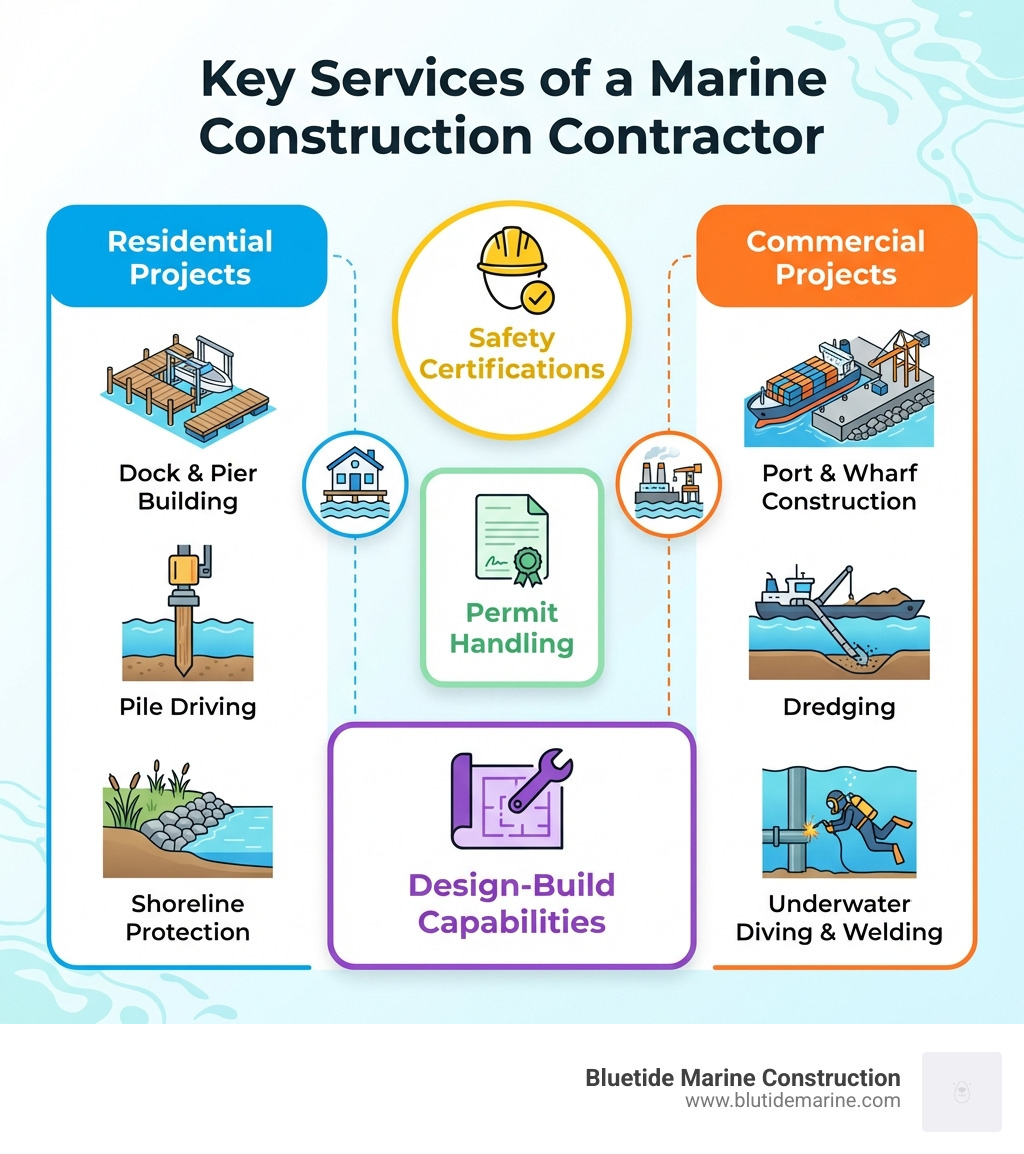
Core Services of a Professional Marine Construction Contractor
When you hire a marine construction contractor in regions like Charleston, SC, or the Lowcountry, you aren’t just hiring someone with a hammer and a boat. You are hiring a team capable of managing the unique physics of water-based environments.
Professional contractors offer a “one-stop-shop” approach that covers both surface and subsurface needs. This means they can handle everything from the visible decking on a pier to the invisible pile foundations driven deep into the riverbed.
Surface Construction
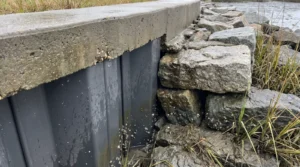
This includes the structural assembly of docks, wharves, and piers. It also encompasses shoreline protection, such as the installation of riprap (large armor stones) or the construction of stone revetments. These structures are vital for preventing erosion in coastal areas subject to high tide cycles and storm surges.
Subsurface Expertise
What happens beneath the waterline is often more complex than what happens above it. This involves:
- Pile Driving: Installing steel, concrete, or timber piles to support heavy structures.
- Dredging: Removing sediment from the bottom of lakes, rivers, or harbors to ensure navigation depth or for environmental remediation.
- Subaqueous Utilities: Laying pipelines, cables, and intake/outfall systems across the floor of a body of water.
Why Experience Matters in a Marine Construction Contractor
In the marine world, longevity isn’t just a number—it’s a testament to a company’s ability to survive the harsh conditions they work in. Many established firms have histories spanning 75 to 100 years. This level of industry longevity brings:
- Technical Proficiency: Knowing exactly how local soil conditions respond to pile driving.
- Project Management: The ability to coordinate barges, cranes, and divers in a synchronized dance.
- Safety Culture: An uncompromising commitment to safety, often evidenced by certifications like COR™ (Certificate of Recognition) or high-level insurance bonding.
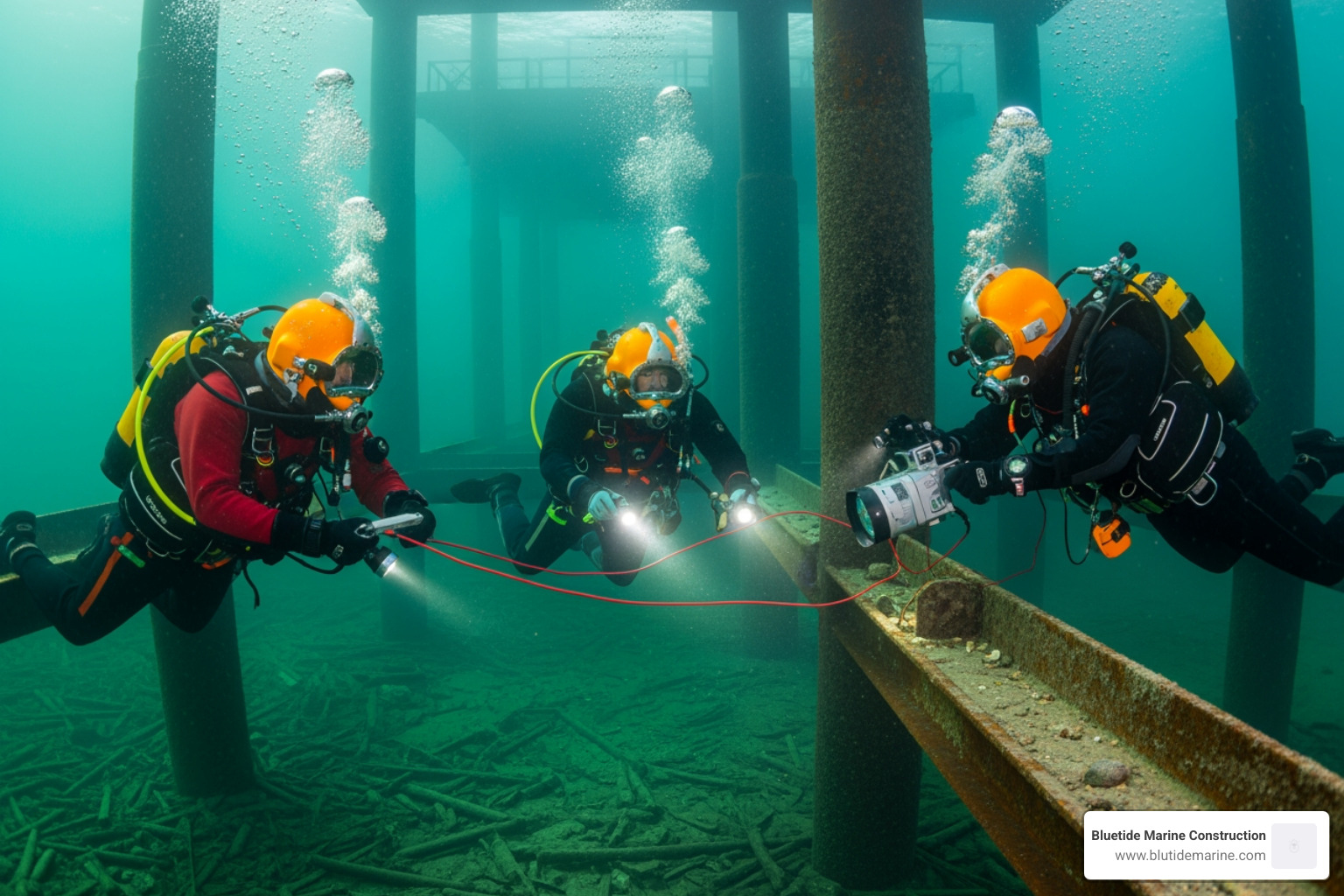
Specialized Underwater Services and Commercial Diving
Some projects require a marine construction contractor to go deep. Commercial diving teams are the backbone of subsurface maintenance. These professionals are trained for:
- Underwater Welding and Cutting: Using specialized equipment to repair steel sheet piles or ship hulls.
- ROV Inspections: Deploying Remotely Operated Vehicles equipped with cameras and sonar to inspect structures in depths or conditions unsafe for human divers.
- Grout Injection: Filling voids in underwater foundations to stabilize structures like bridge piers or dams.
- Pipeline Remediation: Cleaning and repairing water intake systems or wastewater outfalls.
Key Types of Marine Projects: From Residential to Heavy Civil
Marine construction is a broad field. While the basic principles of working over water remain the same, the requirements for a residential dock are vastly different from those of a commercial shipping terminal.
Residential vs. Commercial Marine Construction Requirements
| Feature | Residential Marine Construction | Commercial/Heavy Civil Marine |
|---|---|---|
| Primary Goal | Recreation and aesthetics | Logistics, transport, and industry |
| Typical Structures | Floating docks, boathouses, boat lifts | Wharves, bulkheads, bridge piers |
| Permitting | Local/State (SCDHEC/OCRM) | Federal (USACE), State, and Municipal |
| Equipment | Small barges, light pile drivers | Heavy crane barges, tugboats, dredges |
| Materials | Treated timber, composite, aluminum | Steel, high-strength concrete, armor stone |
Residential Waterfront Solutions
For homeowners in Johns Island or the wider Charleston area, a marine construction contractor helps transform a backyard into a functional gateway to the water.
Key residential services include:
- Floating and Stationary Docks: Tailored to the specific water depth and tidal range of your property.
- Boathouses and Ports: Custom-built structures to protect your vessel from the elements.
- PWC Lifts: Mechanical systems to keep jet skis and small boats out of the salt water when not in use.
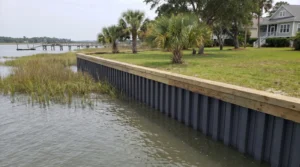
- Shoreline Erosion Control: Using retaining walls or natural stone to prevent the loss of your land to the current.
To learn more about how we can transform your property, explore our residential services.
Heavy Civil and Industrial Infrastructure
On the larger end of the spectrum, heavy civil marine construction supports the backbone of our economy. This includes:
- Port Construction: Building and repairing the massive wharves and berthing structures used by international shipping containers.
- Bridge Building: Constructing the deep foundations and spans that connect our coastal communities.
- Dam and Lock Refurbishment: Maintaining the gates, valves, and concrete structures that control water flow and navigation.
- Water Intakes: Building the massive pipes that supply cooling water for power plants or raw water for municipal treatment facilities.
Essential Equipment and Technology in Marine Construction
You can’t do this job with a standard toolbox. A top-tier marine construction contractor maintains an expensive and highly specialized fleet.
- Sectional Barges: These are like giant LEGO blocks for the water. They can be transported over land by truck and pinned together on-site to create a stable work platform for cranes and excavators.
- Tugboats and Launch Services: Essential for moving equipment and personnel across busy harbors or to remote island locations.
- Amphibious Dredges: Specialized machines that can work in the transition zone between land and water, perfect for marshland or shallow-water dredging.
- Hydrographic Surveying: Using advanced technology like Side-scan sonar and Multi-beam Acoustic Bathymetry to create a 3D map of the underwater terrain before construction begins.
Advanced positioning tools like RTK GPS (Real-Time Kinematic) allow operators to place piles or stones with sub-inch accuracy, even when the barge is moving with the tide.
Navigating Safety, Permits, and Environmental Compliance
In marine construction, safety and environmental protection are not optional—they are the law. Working in South Carolina means adhering to strict regulations from the U.S. Army Corps of Engineers (USACE) and state environmental agencies.
Safety and Certifications
Established contractors often hold certifications that prove their commitment to a zero-fatality workplace. This includes:
- HIRA Assessments: Hazard Identification and Risk Assessment protocols performed before every project.
- DCBC Standards: Ensuring all commercial divers are certified by the Diving Certification Board of Canada or equivalent national bodies.
- Insurance and Bonding: A reputable contractor must be fully insured and bondable to take on significant infrastructure projects.
Environmental Stewardship
Protecting the delicate coastal ecosystem of the Lowcountry is a top priority. Contractors use turbidity curtains to prevent sediment from spreading during dredging and follow strict guidelines for “shoreline-friendly” construction. This often involves working entirely from the water to avoid disturbing land-based vegetation and habitats.
For more information on our professional standards, check out our commercial services.
Future Trends: Coastal Resiliency and Renewables
The industry is currently shifting toward “coastal resiliency.” As sea levels rise and storms become more frequent, a marine construction contractor is often called upon to build:
- Flood Walls and Sea Gates: To protect urban areas from storm surges.
- Offshore Wind Infrastructure: Supporting the energy transition by building foundations for wind turbines.
- Habitat Restoration: Using “living shorelines”—a mix of plants, sand, and rock—to provide natural protection and improve biodiversity.
Frequently Asked Questions about Marine Construction Contractors
How deep can a marine construction contractor perform underwater work?
Most standard marine construction in the Southeast, such as bridge repairs or pipeline work, occurs in depths of 60 feet or less. However, using surface-supplied air, commercial divers can safely work at depths up to 165 feet. For anything deeper, contractors typically utilize ROVs or specialized saturation diving teams.
What is the difference between a stationary and a floating dock?
The choice depends entirely on your location.
- Stationary Docks: These are fixed to piles and are best for areas with minimal water level fluctuation. They are sturdy but can be submerged during extreme high tides.
- Floating Docks: These rise and fall with the tide, ensuring your boat is always at the same level relative to the dock. They are the preferred choice for the tidal creeks of Charleston and Johns Island.
Why is design-build a preferred approach for marine projects?
A design-build approach means the contractor handles both the engineering and the construction. This creates a “turnkey” solution that often:
- Reduces Costs: By identifying construction challenges during the design phase.
- Optimizes Schedules: Because construction can often begin while final design details are being wrapped up.
- Improves Collaboration: There is a single point of accountability for the entire project.
Conclusion
Choosing the right marine construction contractor is the most important decision you will make for your waterfront project. Whether you are looking to build a private retreat in the Lowcountry or manage a major industrial terminal in Charleston, you need a partner who brings professional integrity, specialized equipment, and deep-seated local experience to the table.
At Bluetide Marine Construction, we pride ourselves on our ability to navigate the complexities of the water with honesty and technical excellence. Don’t leave your shoreline to chance—work with a team that understands the tides.
Ready to start your next project? Contact a Marine Construction Contractor at Bluetide Marine Construction today for a professional consultation.