Stop Floating Around and Find Your Perfect Lake Dock Builder
Why Finding the Right Boat Dock Builder Near You Changes Everything
Boat dock builders near me is one of the most searched phrases by waterfront property owners — and for good reason. The builder you choose will determine how well your dock holds up against tides, storms, and years of saltwater exposure.
Here’s what to look for when searching for local dock builders:
| Factor | Why It Matters |
|---|---|
| Local experience | Builders who know your waterfront’s conditions build better structures |
| Full-service offering | Permitting, design, construction, and maintenance under one roof saves time |
| Licensed and insured | Protects you if something goes wrong on the job |
| Portfolio of local projects | Proof they can handle your specific environment |
| Free consultation | Lets you compare builders before committing |
For Lowcountry property owners in coastal South Carolina, the stakes are especially high. Tidal fluctuations, soft soils, saltwater corrosion, and strict coastal regulations make dock building far more complex than in calmer inland environments.
The wrong builder won’t just cost you money — they can leave you with a structure that shifts, rots, or fails a permit inspection.
The good news? The right builder handles everything: design, engineering, permits, and installation. You just show up to enjoy the water.
Types of Docks: Choosing the Right Structure for Your Waterfront
When you start searching for boat dock builders near me, the first question you’ll likely face is: “What kind of dock do you want?” In the Lowcountry, from Johns Island to the reaches of the Wando River, the answer depends entirely on your specific shoreline.
| Dock Type | Best For | Water Conditions | Main Advantage |
|---|---|---|---|
| Floating Docks | Deep water & high tides | Fluctuating levels | Always level with your boat |
| Pole Docks | Shallow water | Constant levels | Stable, fixed foundation |
| Tower Docks | Multi-level use | Deep/Stable | Ultimate views and storage |
Floating Docks
Floating docks are the gold standard for tidal environments. Because they sit on HDPE pontoons, they rise and fall with the tide, ensuring your boat is always at the perfect height for boarding. High-quality floating systems often utilize 18″ or 24″ diameter HDPE pontoons with thick walls (up to 7/8″) for maximum buoyancy and durability.
Pole and Tower Docks
For those in shallower areas or looking for a more permanent “pier” feel, pole docks are fixed into the ground. Tower docks take this a step further, offering elevated platforms that are perfect for two-story “boathouse” designs. More info about residential dock types can help you visualize how these structures integrate into a private residence.
Why Local Expertise Matters for Boat Dock Builders Near Me
You wouldn’t hire a desert landscaper to plant a rainforest, and you shouldn’t hire a freshwater dock builder for the Lowcountry. Our region presents unique challenges:
- Tidal Fluctuations: In Charleston, the tide can swing significantly twice a day. A dock that isn’t engineered for this movement will literally tear itself apart.
- Soil Conditions: The “pluff mud” of South Carolina requires specialized pile driving to ensure your dock doesn’t sink or lean.
- Saltwater Corrosion: Salt air eats standard metal for breakfast. We utilize 60-61 marine-grade aluminum and galvanized components to prevent rust.
- Mooring Systems: For maximum security, we recommend a Boat Mooring Tensioner to keep your vessel safe during rough weather.
Selecting Materials for Longevity
The materials you choose today determine how much you’ll spend on repairs ten years from now.
- Aluminum Frames: Specifically 60-61 marine grade, which offers superior strength-to-weight ratios and won’t rot like wood.
- HDPE Pontoons: High-Density Polyethylene is puncture-resistant and can even handle being frozen in ice (though that’s less of a worry here in Charleston!).
- Decking Options: While traditional cedar offers a classic look, many homeowners now opt for vinyl or composite decking. These materials don’t splinter, stay cooler in the South Carolina sun, and require almost zero maintenance.
- Hardware: We emphasize Anchor Mooring Tensioners and galvanized chains over inferior rope mooring to ensure your structure stays put.
Key Factors to Consider When Hiring Boat Dock Builders Near Me

Choosing from the list of boat dock builders near me requires more than just looking at a price tag. You are essentially hiring a marine architect and a heavy-machinery operator all in one.
Experience and Credentials
Look for a team with a proven track record. Reputable builders often boast decades of experience—some with over 35 years in the industry and thousands of successful installs. Ensure your builder is:
- Licensed: Specifically a South Carolina contractor’s license for marine construction.
- Bonded and Insured: This protects your property and the workers during the build.
- Expert in Design: Look for firms that offer architectural drafting so you can see a 3D model of your project before the first pile is driven.
Navigating Permitting and Regulatory Requirements
In the Lowcountry, you can’t just hammer a post into the mud and call it a day. Dock building is heavily regulated by the Army Corps of Engineers, OCRM, and local municipalities.
- Environmental Impact: Structures must be designed to preserve aquatic ecosystems and marshlands.
- Turn-key Permitting: The best builders handle the paperwork for you. Whether it’s navigating TVA permits in upper regions or coastal codes in Charleston, having a professional manage the regulatory “red tape” is invaluable. More info about commercial marine permitting is a great resource if you’re looking at larger-scale projects.
How to Compare Boat Dock Builders Near Me
When interviewing potential builders, ask for:
- A Portfolio Review: Do they have projects in Johns Island or Mt. Pleasant that look like what you want?
- 3D Quotes: A modern builder should be able to show you a digital mockup.
- In-house Manufacturing: Companies that manufacture their own brackets or pontoons often have better quality control than those who buy “off-the-shelf” kits.
Beyond Construction: Essential Marine Services and Accessories
A dock is more than a walkway; it’s a lifestyle hub. Once the main structure is up, you’ll want to consider the “bells and whistles” that make waterfront living easy.
Boat Lifts and PWC Ports
Keeping your boat out of the saltwater when not in use is the best way to prevent hull osmosis and barnacle growth. We often recommend Hi-Tide boat lifts, which can handle everything from a jet ski to a massive 180,000 lbs vessel. Options include:
- Hydraulic Lifts: Fast and quiet.
- Cable Lifts: The traditional, reliable choice.
- PWC Ports: Simple drive-on docks for your Sea-Doos.
Custom Accessories
To truly make the space yours, consider adding:
- Cocktail Rails: Because every sunset is better with a place to set your drink.
- Fish Cleaning Stations: Essential for the Lowcountry angler.
- Custom Lighting: LED dock lights not only look great but add a layer of safety for night docking.
Erosion Control and Shoreline Stabilization
A beautiful dock is useless if your backyard is washing away. Shoreline stabilization is a critical part of marine contracting.
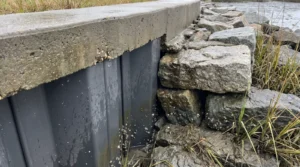
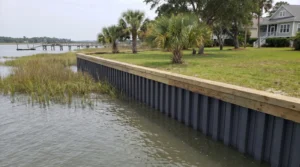
- Seawalls and Bulkheads: These structures hold back the soil and protect your high ground.
- Materials: We use vinyl sheets for longevity (lasting 50-70 years) or steel piling for heavy-duty commercial needs.
- Timeline: Most residential seawalls can be completed in just 1 to 3 weeks, providing immediate storm surge protection.
Understanding Costs and Timelines for Your Custom Dock Project
We know the big question: “How much is this going to cost?” While every project is custom, several factors influence the final quote:
- Water Depth: Deeper water requires longer, more expensive pilings.
- Site Accessibility: Can we get a barge to your shoreline, or do we have to bring materials through the yard?
- Material Choice: Aluminum and composite cost more upfront than pressure-treated wood but save money on maintenance.
- Permitting: Depending on the complexity, permits can take anywhere from a few weeks to several months.
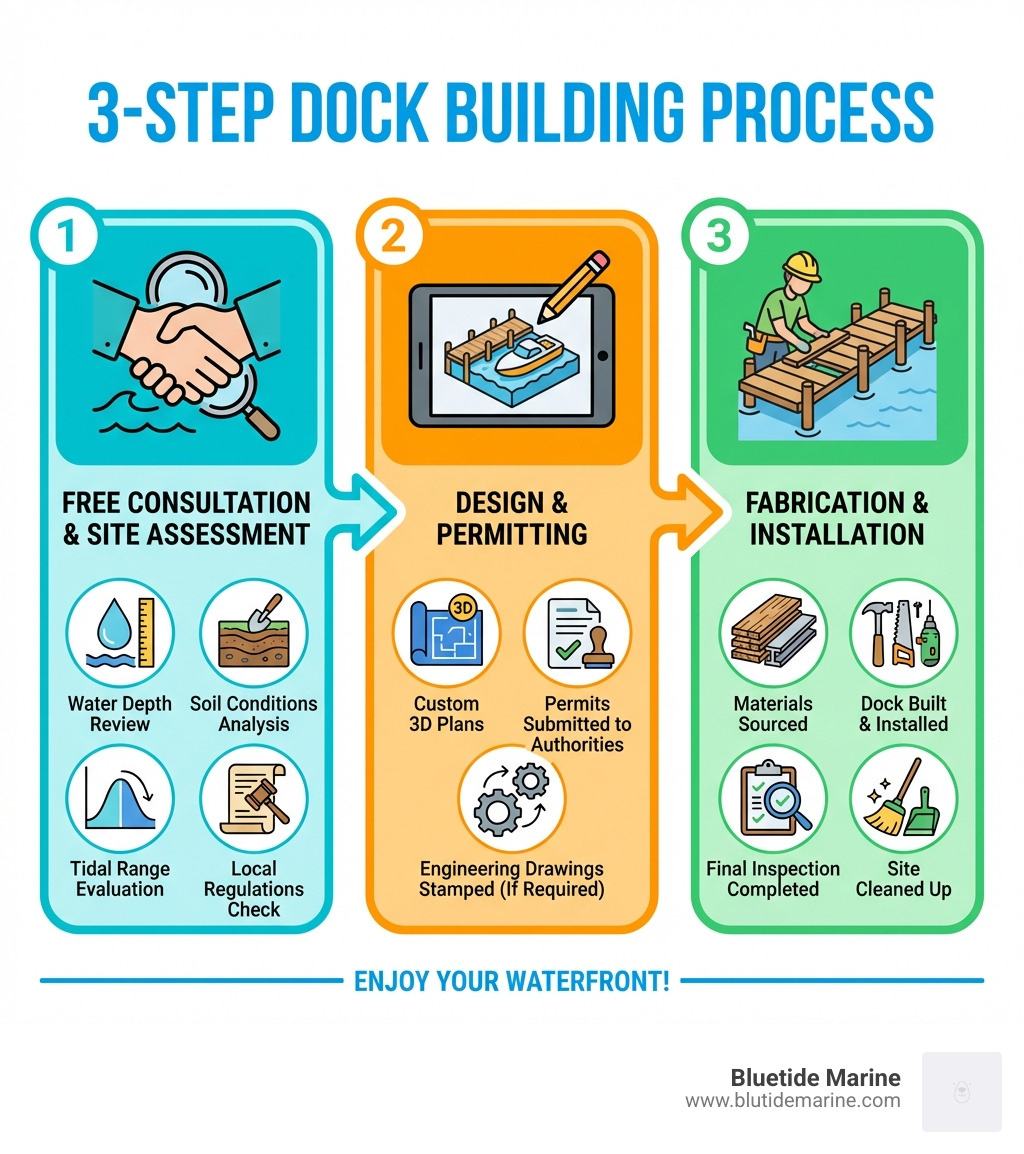
The Construction Process from Sketch to Reality
Our process is designed to be as stress-free as possible:
- Needs Assessment: We talk about how you’ll use the dock (fishing, swimming, or large boat storage).
- Site Consultation: We visit your property to measure depths and check soil.
- 3D Design & Fabrication: We build the components in a controlled manufacturing environment.
- Installation & Cleanup: Our crews install the structure and ensure your property is left in pristine condition.
Frequently Asked Questions About Dock Building
How long does it take to build a boat dock?
While the physical installation might only take 1–2 weeks, the entire process—including design and permitting—usually takes 2 to 4 months. Larger commercial projects or those requiring special environmental assessments can take longer.
What is the best material for a saltwater dock?
For the frame, marine-grade aluminum is unbeatable. For the surface, high-quality composite or vinyl decking is preferred because it resists rot and UV damage much better than wood in the harsh South Carolina sun.
Do I need a permit to repair my existing dock?
In most cases, yes. While minor repairs (like replacing a few boards) might not require a full permit, any structural changes or footprint expansions definitely do. It’s always best to check with a professional to avoid fines.
Conclusion
Your waterfront property is an investment in your lifestyle and your home’s value. Don’t settle for a “cookie-cutter” solution when you can have a structure tailored to the unique challenges of the Lowcountry. Whether you’re dealing with the deep tides of the Stono River or the soft marshes of Johns Island, the right partner makes all the difference.
Stop floating around and start building your dream. Experience the difference of a dock designed for life.