Why Choosing the Right Seawall Contractors Protects Your Waterfront Investment
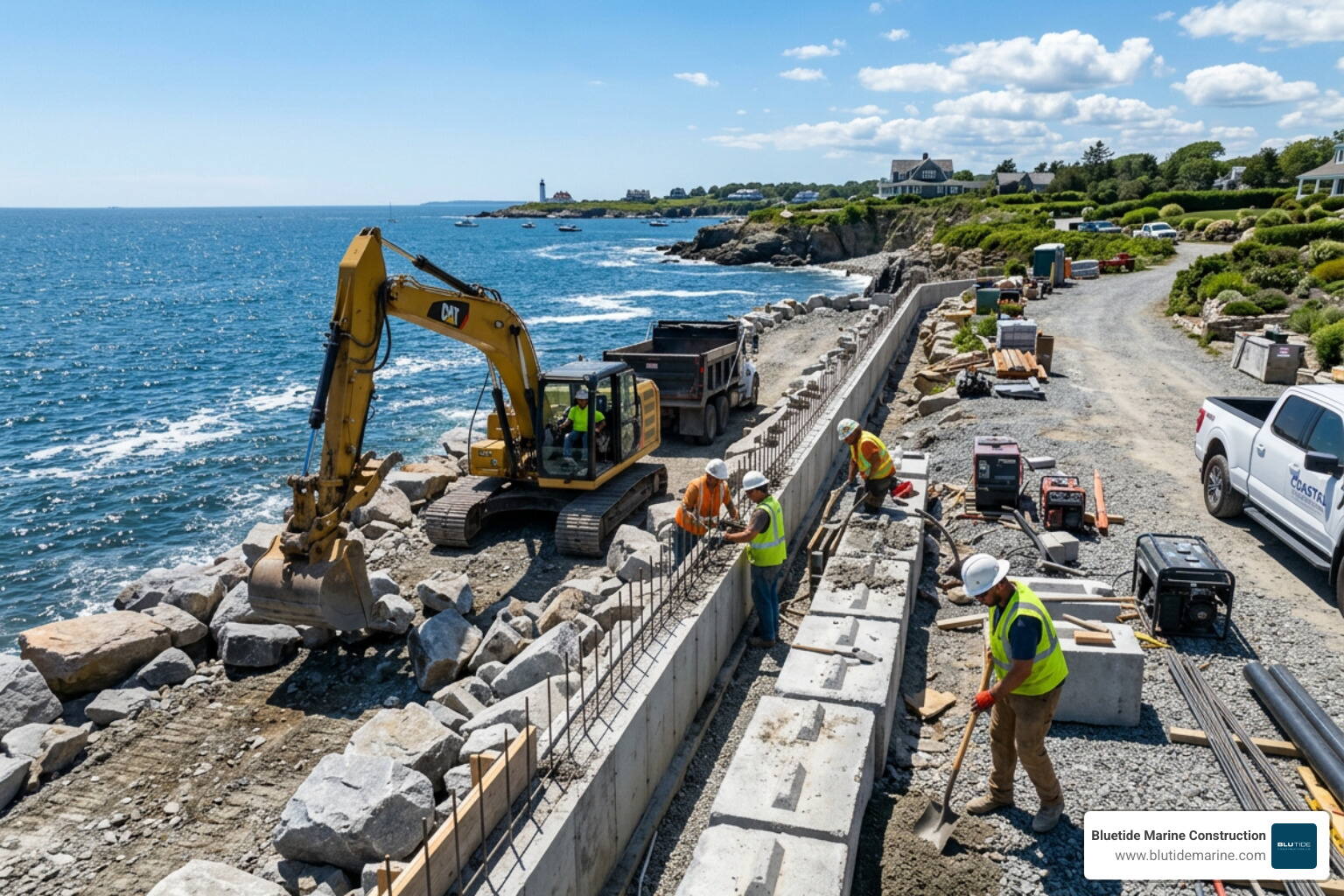
Seawall contractors are licensed marine construction professionals who design, build, repair, and maintain the protective barriers that stand between your waterfront property and the relentless forces of coastal erosion, storm surge, and tidal action.
What do seawall contractors do? Here’s a quick overview:
- Build new seawalls using materials like reinforced concrete, vinyl sheet piling, or riprap
- Repair failing structures — cracks, leaning walls, soil loss, rusted rebar
- Handle all permitting with state and local agencies (critical in South Carolina)
- Install supporting systems like tiebacks, deadman anchors, and hydrostatic drains
- Provide maintenance programs to extend seawall lifespan to 30–50 years
For waterfront homeowners in communities like Kiawah Island and Seabrook Island, the stakes are high. Your seawall is not just a concrete barrier — it is the structural foundation protecting your land, your home, and your property value from the Lowcountry’s punishing tides, hurricanes, and saltwater exposure.
The wrong contractor can leave you with a structure that fails after the first major storm. The right one delivers a seawall engineered to endure for decades.
This guide walks you through everything you need to know before hiring — from materials and warning signs to permitting, vetting, and warranties.
Learn more about seawall contractors:
Essential Services Offered by Professional Seawall Contractors
When you engage with high-end seawall contractors, you aren’t just buying a wall; you are investing in a comprehensive engineering solution. In the Charleston Lowcountry, marine construction requires a multidisciplinary approach that combines geotechnical engineering with master-level craftsmanship.
Our team provides a full suite of Residential Marine Construction services tailored to the specific needs of barrier island estates. This includes everything from initial shoreline stabilization to the installation of complex bulkhead systems designed to handle the 6-to-8-foot tidal swings common in our region. For larger developments and HOAs, our Commercial Marine Construction division manages large-scale coastal protection projects that require heavy machinery and specialized barge access.
Comprehensive Shoreline Stabilization
Shoreline stabilization is the primary goal of any seawall. This involves more than just driving piles into the mud. It requires a deep understanding of Charleston Waterfronts and how wave energy interacts with different soil types. We offer:
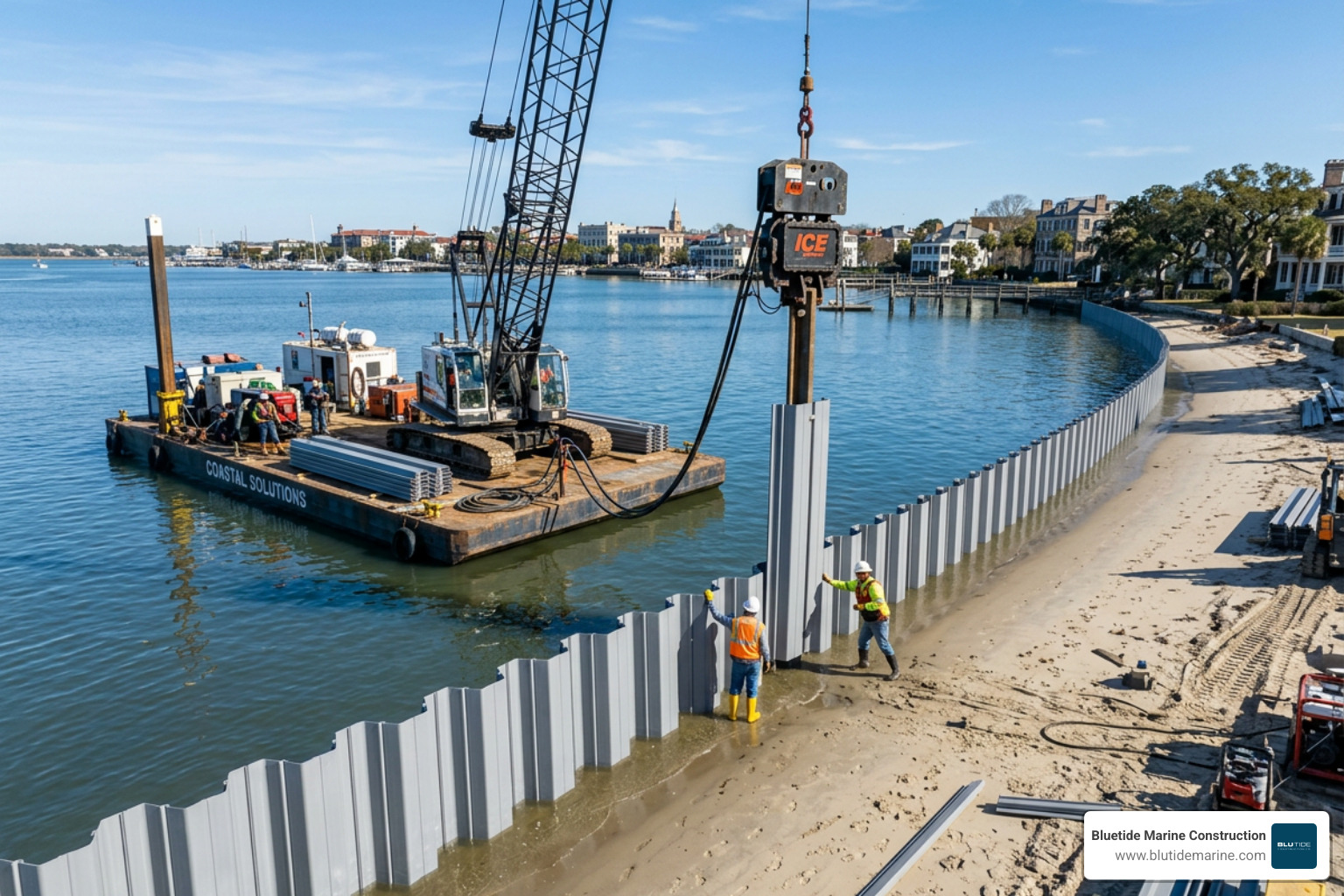
- Vinyl Sheet Piling Installation: A modern, durable alternative to traditional materials that is resistant to marine borers and corrosion.
- Reinforced Concrete Seawalls: The gold standard for structural integrity, often used for high-impact areas or properties with significant upland structures to protect.
- Rock Revetments (Riprap): A more “natural” look that uses strategically placed stones to absorb wave energy and prevent soil migration.
- Boat Lift Integration: We don’t just build the wall; we ensure it is structurally prepared to support heavy-duty boat lifts, ranging from 1,000 to 60,000 lb. capacity.
Maintenance and Emergency Repair
A seawall is a dynamic structure. It breathes and shifts with the tides. Professional seawall contractors provide ongoing maintenance programs that include periodic inspections, cleaning, and minor repairs to prevent catastrophic failure. In the event of a hurricane or severe storm surge, emergency repair services are vital to stabilizing a compromised wall before the next high tide causes further inland damage.
Why Experience Matters for Seawall Contractors
You wouldn’t hire a general home builder to design a skyscraper, and you shouldn’t hire a standard concrete contractor to build a marine barrier. Experience in the marine environment is non-negotiable.
In the Lowcountry, “tidal mastery” is a real skill. Knowing exactly when to pour concrete or drive piles based on the tide schedule can mean the difference between a wall that stands for 50 years and one that settles unevenly within months. With decades of collective expertise, we bring engineering precision to every project, performing detailed soil condition analysis to ensure the foundation of your wall is anchored in stable substrate, not just shifting pluff mud.
Long-Term Warranties Provided by Seawall Contractors
When you invest in a high-quality seawall, you should expect a warranty that reflects the durability of the materials. Premium seawall contractors often provide extensive warranties on modern materials. For instance, vinyl and composite sheet piling products often come with a 50-year warranty. These warranties typically guarantee the structure against:
- Rust and Corrosion: Essential in our high-salinity environment.
- Marine Borers: Organisms that can quickly destroy traditional timber seawalls.
- UV Damage: Ensuring the material doesn’t become brittle under the intense South Carolina sun.
- Rot and Decay: A common issue with wood that is mitigated by using advanced composites or reinforced concrete.
Understanding Seawall Materials and Engineering Standards
Choosing the right material is a balance of aesthetics, budget, and environmental exposure. As experts in the field, we guide our clients through Everything You Need to Know About Marine Contractors and the material science behind a lasting barrier.
Material Comparison
| Material | Typical Lifespan | Durability | Best For |
|---|---|---|---|
| Reinforced Concrete | 30–50+ Years | Extremely High | High-energy waves, heavy structural support |
| Vinyl Sheet Piling | 50+ Years | High (Corrosion Proof) | Residential canals, brackish water, aesthetic appeal |
| Composite Materials | 40–50 Years | High | Harsh environments where aesthetics matter |
| Riprap (Stone) | Indefinite | Medium-High | Erosion control, natural shorelines |
| Specialty Hardwoods | 15–25 Years | Medium | Historic aesthetics, low-energy environments |
The Engineering Behind the Wall
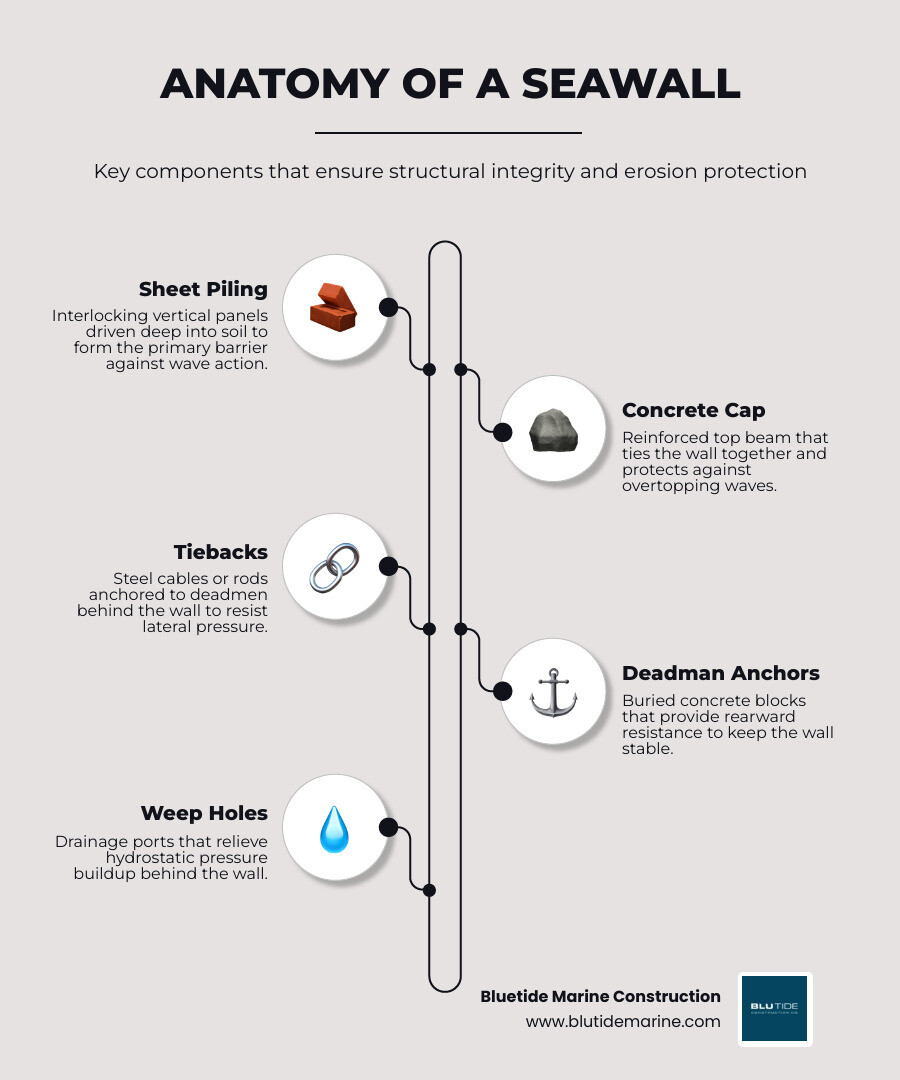
A seawall fails not because it isn’t “strong” enough, but because of hydrostatic pressure. This is the pressure of water trapped behind the wall (in the soil) compared to the water level in the canal or harbor. If the water behind the wall cannot drain, it will eventually push the wall over.
- Hydrostatic Drainage (Weep Holes): These are critical valves that allow water to escape from behind the wall while keeping the soil in place.
- Tie-back Systems: These act like anchors. Steel or composite rods run from the wall deep into the land, where they are attached to “deadman” anchors (large concrete blocks or piles). This prevents the wall from bowing or leaning outward.
- Caps: The concrete cap at the top of the wall provides horizontal rigidity and a clean, finished look. In some areas, like Charleston and Broward County, codes specify minimum elevations for these caps to combat rising sea levels.
Critical Signs Your Waterfront Barrier Requires Immediate Repair
Ignoring a small crack in a seawall is a recipe for a multi-figure disaster. Because the damage often happens underwater or behind the wall, you must be vigilant in looking for the “early warning” signs of failure.
Common Red Flags
- Structural Cracks: Vertical or horizontal cracks in the concrete cap or panels are signs of excessive stress or rusted internal rebar.
- Leaning or Bowing: If the wall looks like it is “tipping” toward the water, your tie-back system has likely failed.
- Sinkholes and Soil Loss: If you notice holes forming in your yard near the wall, soil is being sucked out through gaps in the panels or failed joints.
- Rusted Rebar (Spalling): When you see rust stains on the concrete, it means the internal steel is expanding and breaking the concrete from the inside out.
- Pooling Water: Water that sits behind the wall for hours after rain or high tide suggests your drainage system (weep holes) is clogged.
Staying updated with Construction News can help you understand how new weather patterns and rising tides are affecting local structures. While repair costs can range from $100 to $300 per linear foot depending on the severity, this is a fraction of the cost of a total wall replacement.
Navigating the Permitting and Construction Process in the Lowcountry
Building on the water in South Carolina is a highly regulated process. You cannot simply start driving piles. Doing so without the proper oversight can lead to massive fines and the forced removal of the structure.
When we handle complex marine construction projects, we manage the entire bureaucratic maze for you. This includes:
- OCRM and DHEC Compliance: The South Carolina Department of Health and Environmental Control (DHEC) and the Office of Ocean and Coastal Resource Management have strict guidelines on where and how seawalls can be built to protect the coastal ecosystem.
- Environmental Compliance: Ensuring that construction does not negatively impact local marshlands or protected species.
- Engineering Review: Every new wall must be signed off by a professional engineer to ensure it meets local building codes and safety standards.
For official permitting context, property owners can also review coastal management resources from the South Carolina Department of Environmental Services before starting a project.
The Typical Timeline
While every project is unique, the permitting phase typically takes about four weeks, though complex projects can take longer. Once permits are secured, we develop a comprehensive site plan. Choosing the Right Marine Construction Contractor means finding a team that owns its equipment – including marine construction barges – which allows us to access your property from the water, minimizing damage to your landscaping and upland structures.
How to Vet High-End Marine Specialists for Your Investment
Your waterfront property is likely one of your most significant assets. Entrusting its protection to the lowest bidder is a dangerous gamble. You need a team that understands What Do Marine Dock Contractors Actually Do? and has the portfolio to prove it.
The Vetting Checklist
- Licensing and Insurance: Ensure the contractor is fully licensed for marine work in South Carolina and carries significant liability and workers’ compensation insurance.
- Portfolio Review: Ask to see projects that are at least 5 to 10 years old. Any wall looks good on day one; the real test is how it looks after a decade of Lowcountry tides.
- Client Testimonials: Look for reviews from homeowners on Kiawah, Seabrook, or Johns Island who have similar soil conditions to yours.
- Proprietary Technology: Do they use modern anchoring systems like Manta Rays or helical piers?
- Specialized Knowledge: If you need a beach access point, ensure they have experience in Professional Beach Crossover Construction.
By following our guide on How to Choose the Best Lowcountry Marine Construction Team, you can ensure that your contractor has the engineering depth required for a high-end project.
Frequently Asked Questions about Seawall Construction
What factors influence the total cost of a seawall project?
Several variables determine the investment required for a seawall. Material selection is the biggest factor, with reinforced concrete and high-end composites costing more than basic vinyl or riprap. Other factors include the linear footage, the height of the wall required to meet local flood codes, and soil density (which determines how deep the piles must be driven). Site accessibility also plays a role; if we have to bring in materials via barge, the logistics are more complex than a roadside project. If your project includes other structures, you may want to consult with Pier Contractors Near Me to see how they integrate with the wall.
How long does a high-quality seawall typically last?
A well-constructed seawall built with premium materials like vinyl sheet piling or reinforced concrete should have a 30–50 year lifespan. However, this longevity is dependent on routine maintenance and the level of environmental exposure. Properties on the open harbor facing direct wave action will experience more wear than those in a protected canal.
Do I need a permit for seawall repairs in South Carolina?
Yes. Almost all waterfront construction and repair work in South Carolina requires state and local authority compliance. This is to ensure environmental protection and structural safety. We provide professional permitting assistance to ensure your project moves forward without legal delays. If you are unsure if your repair requires a permit, Contact Us for a consultation.
Conclusion
At BluTide Marine Construction, we believe that a seawall should be as beautiful as it is functional. We merge raw coastal power with refined craftsmanship to create enduring waterfront structures that stand the test of time. Whether you are on Johns Island, Kiawah Island, or in the heart of historic Charleston, our team is dedicated to providing the highest level of Residential Marine Construction and shoreline stabilization.
Don’t wait for the next storm to test the integrity of your shoreline. Choose a partner that understands the unique engineering challenges of the Lowcountry.
Contact Us to Discuss Your Project Phone: +1 (843) 557-1595 Email: blutidemarine@outlook.com