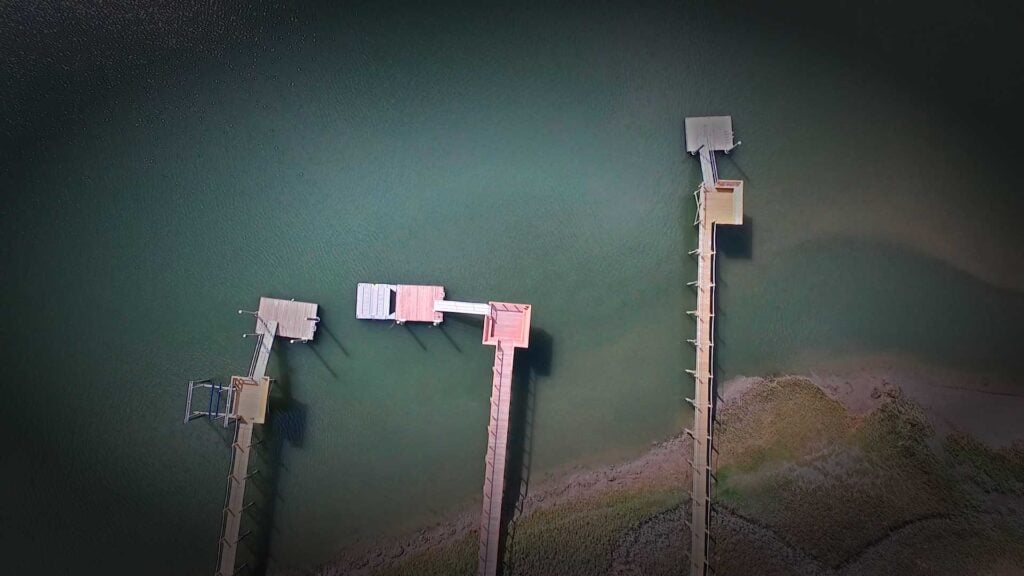
Dock and bulkhead construction on Folly Beach: what is different about building here
Folly Beach is a barrier island with a character all its own, and building at its water’s edge is not the same as building a few miles inland. The island has an oceanfront on one side and tidal creeks, marsh, and the Folly River on the other. Depending on which side of the island you are on, the rules, the conditions, and the right construction approach change completely.
If you own property on Folly Beach, or on the creeks and marsh around it, and you are thinking about a new dock, a bulkhead repair, or a shoreline project, this guide explains what to expect and what to ask a marine contractor.
Know which side of the island you are on
Oceanfront
The oceanfront is governed by the South Carolina Beachfront Management Act, which strictly limits new erosion-control structures on the beach. Building a new seawall or hardened structure on the ocean side is generally not permitted, and work on existing oceanfront structures is tightly regulated. Beachfront work is a specialized area with its own rules, so confirm what applies to your lot with the Office of Coastal Resource Management (OCRM, part of the South Carolina Department of Environmental Services) before planning anything.
Creek, marsh, and river side
This is where most residential dock and bulkhead work happens. Properties on the back side of the island, along tidal creeks and the marsh, can be candidates for private docks, boat lifts, and bulkheads, subject to permitting. The remainder of this guide focuses on this side.
Conditions that shape construction here
- Tidal range. Lowcountry tides swing roughly five to six feet, which affects dock length, ramp angles, float design, and how much water you have at low tide.
- Shallow, shifting creeks. Small tidal creeks can be narrow and shallow at low water, so reaching usable depth can require a longer walkway or a design built around the creek’s limits.
- Marsh and soft soils. Pilings through marsh mud need to be sized and embedded for the ground they are in.
- Salt, wind, and storms. Salt air and exposure to hurricane season mean hardware, fasteners, and framing should be specified for coastal conditions. See our notes on storm preparation for docks and seawalls.
- Access. Island streets and lots can be tight, so equipment and material delivery often calls for planning, and sometimes for working from the water.
- Neighboring properties and views. Dock length and placement are constrained by property lines, navigable channels, and the neighbors’ access.
Permitting on Folly Beach
Docks and shoreline structures on tidal waters generally require authorization from OCRM and, in most cases, from the U.S. Army Corps of Engineers Charleston District. Marsh-front lots add the question of critical area boundaries and the permitted length of a dock across marsh. The City of Folly Beach and Charleston County may also have approvals of their own. Our guides to dock permitting in Charleston County, the OCRM critical area process, and permitting for waterfront construction walk through the steps. Confirm all requirements with the agencies for your specific lot.
Dock types that suit creek and marsh properties
Because water depth varies so much with the tide, the type of dock matters. Fixed docks on pilings work well where there is enough water at low tide. Floating docks rise and fall with the tide and can be a good fit for shallow, variable depths, as long as there is enough bottom clearance at low water and proper guide pilings. We compare these in our guide to fixed vs. floating docks, and look at floating dock costs. A boat lift is often paired with a dock on these properties, and our overview of boat lift installation explains the considerations.
Bulkheads and shoreline protection
On the creek side, erosion and tidal action can undermine a lot’s edge over time. Options include a bulkhead or seawall, a rock revetment, or a living shoreline of the sort used in marsh settings. The right answer depends on the site. See bulkhead vs. seawall vs. riprap and living shoreline options, and if an existing structure is failing, bulkhead replacement explains the process.
Maintenance on an island lot
Salt and storms are tough on any waterfront structure, and on a barrier island, they are constant. An annual walk-through catches problems early. Our dock inspection checklist is a good place to start, and our storm damage guide covers what to do after a major event.
Working with a contractor near Folly Beach
BluTide Marine Construction works throughout the Charleston area, including the waterways around James Island and Folly. See our guide for owners on James Island and West Ashley for more local context. When you speak to any contractor, ask who handles permitting, how they account for the tide range, how they specify hardware for salt exposure, and what documentation you will receive. Our advice on how to choose a dock builder covers these questions in more detail.
Frequently asked questions
Can I build a dock on Folly Beach?
On the creek, marsh, and river side, it may be possible, subject to OCRM and Army Corps authorization and local approvals. Oceanfront structures are heavily restricted. Confirm what applies to your lot before planning.
Do I need a permit for a dock on a tidal creek?
Generally yes. Docks in tidal waters and the critical area require state authorization and often a federal one as well.
Can I build a seawall on the oceanfront at Folly Beach?
New erosion-control structures on the oceanfront are generally prohibited under the Beachfront Management Act. Talk to OCRM about any work on an existing oceanfront structure.
What is the best type of dock for a shallow creek?
It depends on depth at low tide, the length of walkway needed, and permit limits. Floating docks can work well in variable depths, while fixed docks suit properties with sufficient water. A site visit will settle it.
How long does it take to get a dock permit?
Timelines vary with the project and agency workload. Permitting often takes longer than construction, so start early.
How do tides affect dock design on Folly?
The tide range determines the dock’s height, the length of walkway needed to reach usable depth, the ramp angle, and whether a floating system is suitable. Designing around the low-tide water level is essential.
Planning a dock or bulkhead near Folly Beach?
BluTide Marine Construction designs and builds docks, lifts, and shoreline structures for Lowcountry properties, and manages the permitting. Reach out and we will talk through your lot.